
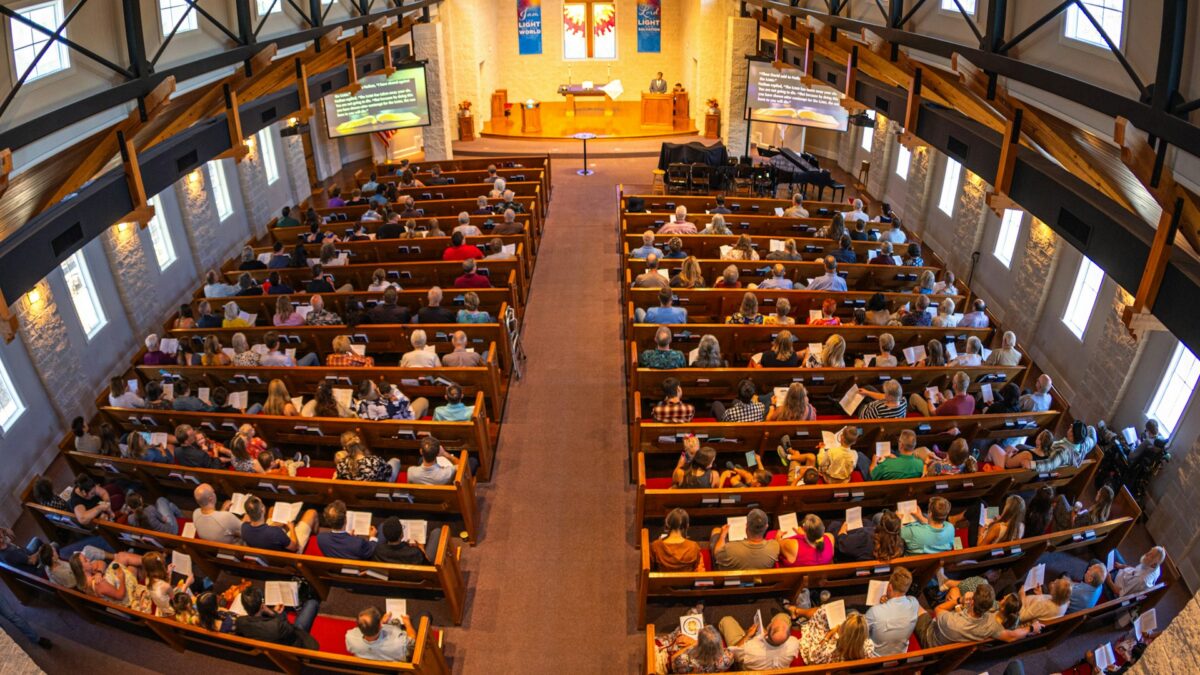
Here is a hard truth for a lot of churches. Some of your people cannot hear the sermon. They nod along, they follow the slides, and they leave without catching half of what was said. For older congregations, and the Phoenix Valley has plenty, that gap is bigger than most leaders realize.
An assistive listening system closes that gap. It also happens to be something the law expects most churches to provide. Let's walk through both sides.
What an assistive listening system does
An assistive listening system takes the audio from your sound board and sends it straight to a small receiver that a person wears, cutting out the room noise and the distance from the speakers. Instead of hearing your voice bounce around a big sanctuary, the listener gets a clean feed right into their ears or their hearing aids. For someone with hearing loss, the difference is night and day.
There are three common types. FM systems broadcast on radio frequencies to handheld receivers. Infrared systems use light and keep the audio inside one room, which some churches like for privacy. Hearing loops, also called induction loops, run a wire around the seating area and send sound directly to any hearing aid switched to its telecoil setting, with no receiver to hand out at all.
What the ADA actually requires
The Americans with Disabilities Act and its 2010 Standards for Accessible Design set the rules here. If your sanctuary has a sound system and fixed seating, an assistive listening system is generally required. The standard also spells out how many receivers you need based on how many seats you have, and it requires that a share of those receivers work with hearing aids. At least 25 percent of the receivers, and never fewer than two, have to be hearing-aid compatible. Churches that install a hearing loop covering all the seats get a break on that receiver count, since the loop already reaches every compatible hearing aid in the room.
One requirement gets missed constantly. You have to post signage telling people the system exists. A closet full of receivers that nobody knows about does not meet the standard, and more to the point, it does not help anyone. Put up the sign, keep the receivers charged, and make sure a greeter knows how to hand one out.
Churches have some latitude under the law, and enforcement is usually complaint-driven rather than an inspector at the door. Even so, the point is not to dodge the rule. The point is that a member who has trouble hearing is a member you want fully in the room.
Which type fits your church?
For a single sanctuary, a hearing loop is the friendliest option for the people using it, since anyone with a telecoil hearing aid just flips a switch and hears the service with no receiver to borrow or return. The catch is that a loop is an install job, with wire run around the seating area, so it works best when you are already opening up the room for other work. FM systems are flexible and affordable, and they move easily between spaces, which suits a church that meets in more than one room. Infrared keeps the audio inside four walls, which some churches prefer when two rooms sit close together. There is no single right answer. The best fit depends on your building, your budget, and how many rooms you need to cover.
Fitting it into your existing setup
The good news is that an assistive listening system taps into audio you already produce. If your sound board puts out a clean mix, adding a transmitter is a straightforward job. If your audio is not clean, that is the first thing to fix, because the assistive system only sounds as good as the feed it receives. Our post on why churches sound echoey is a useful starting point if speech clarity is already a struggle in your room.
It is also worth thinking about this alongside any larger upgrade. If you are budgeting for new gear anyway, folding in hearing assistance is cheaper than doing it as a one-off later. Our guide to what a church AV system costs can help you see where it fits.
A small system with a big return
Of everything a church can add, few things carry the return of assistive listening. The cost is modest, the install is quick, and the result is a person who used to strain now hearing every word. That is worship becoming accessible in the plainest sense.
If you want to know which type fits your building and how to meet the ADA rules without overspending, talk to the Brilliance AV team. We help Phoenix Valley churches make sure everyone in the room can hear.
About Brilliance AV
Brilliance AV is a church AVL design and installation company based in Tempe, Arizona, serving the Phoenix Valley. Call us at (480) 903-4432, email hello@brillianceav.com, or get in touch through our contact page.