
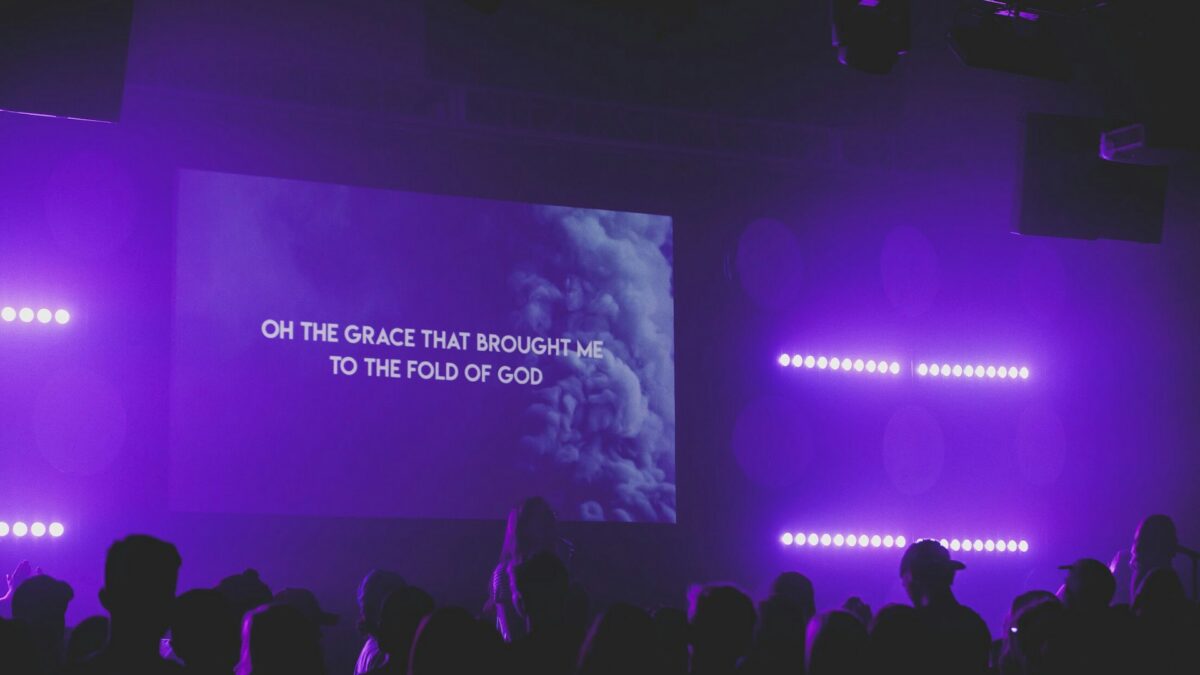
If your sermon slides look washed out or your worship lyrics disappear the moment the sun hits the sanctuary windows, your projector probably is not bright enough. It is one of the most common questions we hear from Phoenix Valley churches, and the honest answer is that lumens matter more than almost any other projector spec. Here is how to size brightness correctly the first time.
What Lumens Actually Measure
Lumens measure the total amount of visible light a projector puts out. More lumens means a brighter image that can stand up to ambient light in the room. A projector that looks stunning in a dark demo room can look faded and gray in a real sanctuary with windows, house lights, and stage wash all competing with it. That gap between the showroom and the sanctuary trips up a lot of churches, so always size your brightness around your worst normal Sunday, not your best-case test.
Brightness by Room Size and Light
As a practical starting point, most churches land in these ranges. Smaller sanctuaries and multipurpose rooms with good light control do well with 5,000 to 6,000 lumens. Medium worship spaces seating a few hundred people usually want 6,000 to 8,000 lumens. Large sanctuaries, rooms with high ceilings, or spaces with a lot of glass typically need 10,000 lumens or more.
Those numbers assume you have some control over ambient light. If you cannot dim the room or cover the windows, size up. It is always cheaper to buy enough brightness once than to replace an underpowered projector a year later.
Why Arizona Sanctuaries Need Extra Muscle
Phoenix Valley churches face a brightness challenge that congregations in cloudier parts of the country do not. Our sun is intense for most of the year, and many local sanctuaries were designed with generous windows and skylights. That natural light is beautiful for the room and brutal for a projected image. If your worship center has east or west facing glass, morning and evening services can be especially tough on a projector.
You have two levers here. The first is controlling the light with shades, tinting, or curtains. The second is buying enough brightness to win the fight anyway. Most Arizona churches end up using a bit of both. When the ambient light is truly uncontrollable, this is often the point where churches start comparing a very bright projector against a direct view LED wall instead.
Projector or LED Wall?
Brightness is exactly where the projector versus LED wall conversation begins. A projector is affordable and easy to replace, but it will always be at the mercy of the light in the room. An LED wall produces its own light and stays vivid even with the house lights up, though it costs more upfront. If you are weighing the two, our guide on projector versus LED wall for churches walks through the tradeoffs, and our overview of LED walls for Arizona churches covers what to know before you buy.
Do Not Forget Resolution, Throw, and Contrast
Lumens get the headline, but a few other specs decide whether the final image looks great. Resolution should match your content, and for text heavy worship slides, sharpness matters. Throw distance determines how big an image you can create from where the projector is mounted, so measure before you buy. Contrast ratio affects how deep your blacks look, which matters for video and photography backgrounds. A good AV designer balances all of these together rather than chasing a single number.
Lamp or Laser?
One more choice affects both brightness and long term cost: the light source. Older projectors use a lamp that slowly dims over time and needs replacing every few thousand hours, often at a few hundred dollars per bulb. Newer laser projectors hold their brightness far longer, run for tens of thousands of hours, and turn on instantly without a warm up. For a church that projects every week, a laser projector usually costs more upfront but saves money and hassle over its life, since you are not buying replacement lamps or watching your image fade a year in. If you are sizing a projector you plan to keep for a decade, laser is worth serious consideration for a busy Arizona sanctuary.
The Bottom Line
For most Phoenix Valley churches, plan on 6,000 to 8,000 lumens as a safe middle ground, and go higher if you have bright windows or a large room. When in doubt, choose more brightness than you think you need, because you can always dim a projector but you can never make it brighter than its rating.
Not sure what your specific room calls for? Our team designs full worship visual systems every week, and we would be glad to take a look. Learn more about what we do or reach out to the Brilliance AV team for a brightness recommendation tailored to your sanctuary.
About Brilliance AV
Brilliance AV is a church AVL design and installation company based in Tempe, Arizona, serving churches across the Phoenix Valley. From audio and video to lighting and networking, we help worship centers build systems that just work. Call us at (480) 903-4432, email hello@brillianceav.com, or contact us here.