If you’ve shopped for church audio gear recently, you’ve seen the word Dante on spec sheets everywhere — consoles, stage boxes, amplifiers, even wireless mic receivers. Ask what it is and you’ll get a fog of networking jargon. Here’s the plain-English version, and why it’s quietly become one of the most useful technologies a church can build on.
Dante in One Paragraph
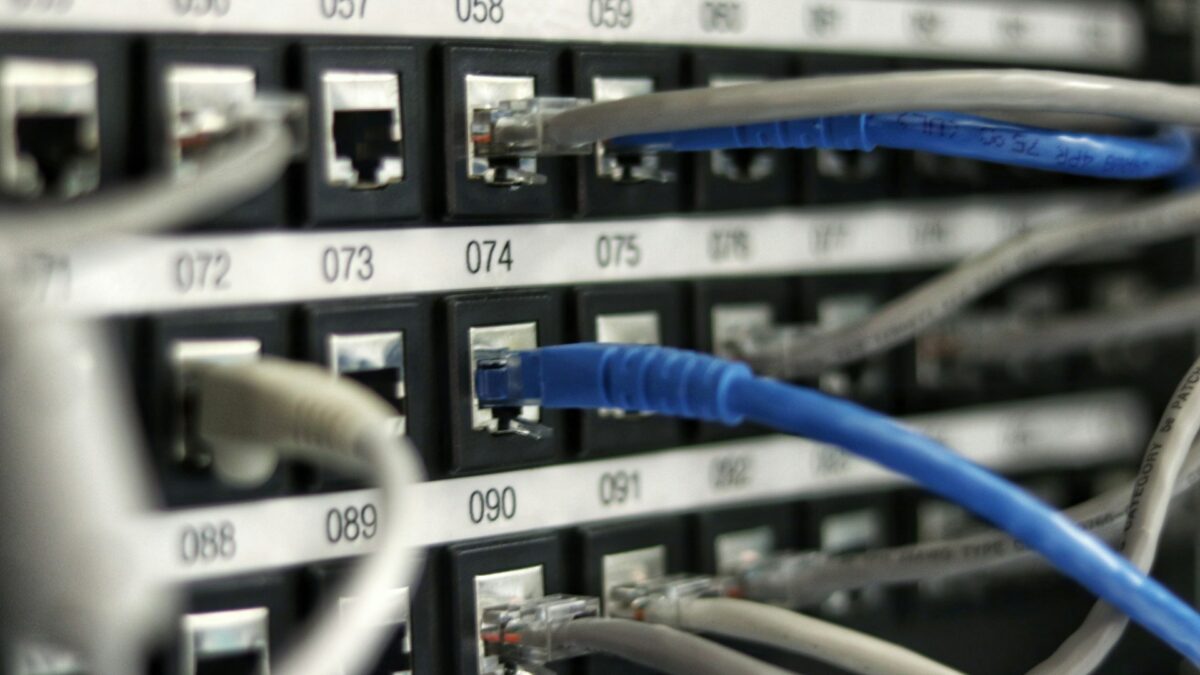
Dante is a way to send many channels of high-quality, real-time digital audio over ordinary network cable — the same Cat6 cable and switches used for computers. One slim network cable can carry hundreds of channels in both directions simultaneously, with near-zero latency and no signal degradation over distance. Instead of a fat analog snake with 32 copper pairs running from your stage to your booth, you run one network cable. That’s the pitch, and it delivers.
Why Churches Specifically Should Care
Cable runs get radically simpler. The traditional analog snake is heavy, expensive, and fixed. With Dante, a stage box near the platform converts mic signals to the network, and from there any signal is available anywhere there’s a network jack. Booth at the back? Video suite down the hall? Overflow room in the youth building? Same cable, same network.
Every signal is available everywhere. This is the part that changes ministry workflows. Your broadcast mix position can grab every individual input without splitters. Your recording computer can capture all 32 channels for the worship team to review — or for a virtual soundcheck, where the band’s last performance is played back through the console so a volunteer can practice mixing on real material with an empty room. Churches that train volunteers this way improve dramatically faster.
It scales without rewiring. Adding a channel used to mean pulling copper. On a Dante system, adding a source is a configuration change, not a construction project. For growing churches — and the Phoenix Valley has no shortage of congregations adding services, venues, and campuses — that flexibility is worth real money over a building’s life.
Fewer boxes, fewer failure points. Modern Dante-enabled amplifiers, processors, and consoles talk to each other directly. Cleaner racks, simpler troubleshooting, less “mystery hum” from long analog runs picking up interference.
The Honest Caveats
Dante is networking, and networking demands discipline. Audio should live on its own network (or a properly configured VLAN) — piggybacking on the church’s general Wi-Fi/office network invites trouble. Switches need to be decent quality. Clocking and routing are set in software (Dante Controller), which is genuinely easy, but somebody needs to understand it. This is exactly the kind of infrastructure that’s worth having designed and documented professionally, because a well-built Dante network is boringly reliable — and a haphazard one fails in ways volunteers can’t diagnose on a Sunday morning.
Also, Dante isn’t the only networked audio protocol — AVB and others exist — but Dante’s ecosystem is by far the broadest, with thousands of compatible products, which is why it’s our default recommendation for churches.
When Does It Make Sense to Switch?
You don’t rip out a working analog system just to be modern. But certain moments make Dante the obvious choice: you’re replacing your console (most worthwhile digital consoles are Dante-ready or have a card slot), you’re renovating or building (network cable is cheap to pull during construction), you’re adding a broadcast/streaming position, you’re going multi-room or multi-venue, or your old analog snake is failing channel by channel. Any of those, and designing around Dante will save you money within a few years — not cost you.
We’ve built Dante backbones for churches around the Valley, and the pattern repeats: the up-front design work pays off every single time the church wants to do something new, because the answer is “yes, the signal’s already on the network” instead of “we’d have to pull cable.”
A quick cost note, because it surprises people: for a new install, a Dante backbone is frequently cheaper than the analog equivalent. Network cable costs a fraction of multicore snake, terminations are faster, and a single managed switch replaces racks of splitters and patch bays. The premium, where there is one, buys you flexibility that analog simply cannot offer at any price.
Build the Backbone Once, Benefit for Decades
Infrastructure isn’t glamorous, but it’s what determines whether your next ten ideas are easy or expensive. If your Arizona church is planning a console upgrade, a renovation, or a streaming build-out, talk to Brilliance AV about designing it on a networked audio backbone. We’ll make it simple, documented, and volunteer-proof.