
It’s one of the most common calls we get at Brilliance AV: “The sound in our room is great. But when we watch the livestream back, it’s awful — the vocals are buried, the drums are gone, and everything sounds thin.” If that’s your church, here’s the good news: nothing is broken. Your system is doing exactly what it was told to do. The problem is that you’re sending the wrong mix to the internet.
The Room and the Stream Are Two Different Worlds
When someone sits in your sanctuary, they hear a blend of everything: the main speakers, the acoustic drums, the amps and stage sound, and the natural energy of the room. Your front-of-house engineer mixes to complete that picture — which means the console mix intentionally leaves things out. If the drums are already loud acoustically, they barely go into the house mix at all.
Now send that same console feed to your stream. Your online viewers don’t hear your room. They hear only what’s in the board — a mix that was never meant to stand on its own. That’s why streams from great-sounding rooms so often have vanishing drums, weak guitars, and vocals that feel disconnected. Meanwhile, your online audience is listening on earbuds, phone speakers, and TVs — environments with completely different needs than a sanctuary.
The Fix: A Dedicated Broadcast Mix
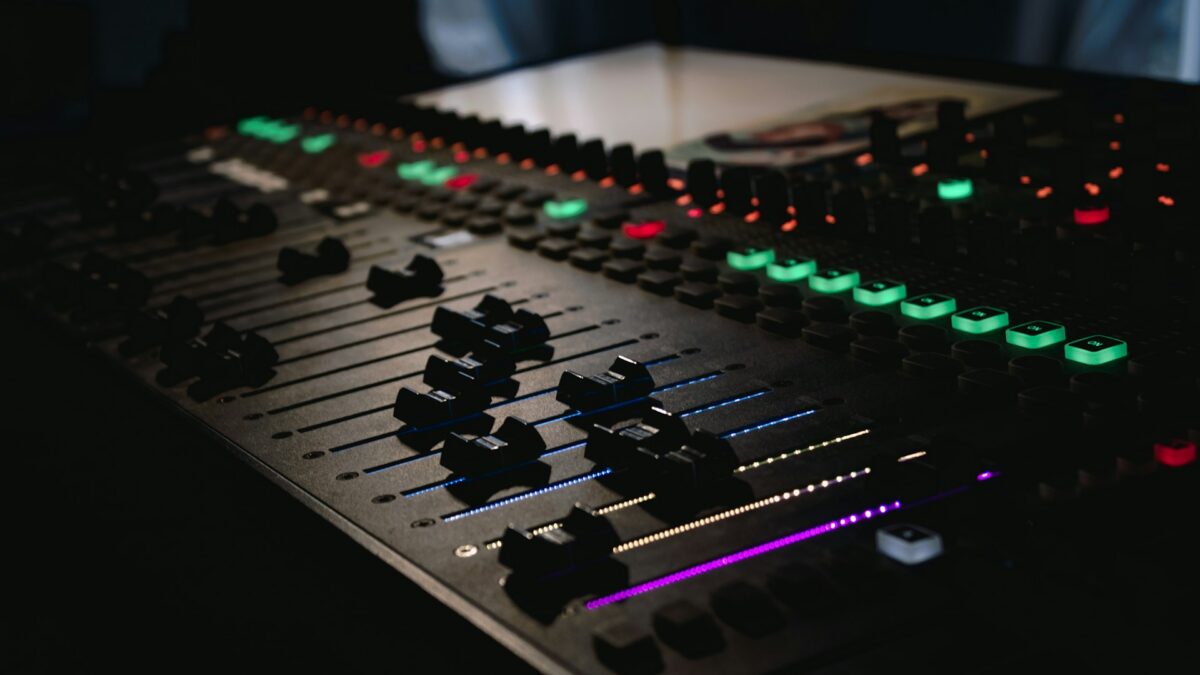
The single biggest improvement you can make to your livestream audio is decoupling it from your house audio. On virtually any modern digital console, you can build a separate bus or matrix output just for broadcast, with its own fader levels, EQ, and processing. The house mix serves the room; the broadcast mix serves the internet. They share inputs, but they are not the same mix.
If your console supports it, a post-fader matrix that follows the house mix with independent trims is a great starting point for volunteer-run booths. Churches with more capacity sometimes go further — a separate volunteer or even a small console dedicated to broadcast. But even the basic version is transformative.
Add the Room Back In
A board feed is dry. It’s missing the congregation singing, the room’s natural reverb, the “you are there” feeling. The fix is simple: hang one or two ambient microphones aimed at the congregation and blend them into the broadcast mix only. Suddenly your stream has life — applause, singing, atmosphere. This is one of the cheapest upgrades in all of church production, and it makes a bigger difference than most gear purchases.
Tame the Dynamics
In the room, your ears adjust naturally between the quiet prayer and the full-band chorus. On a phone speaker in someone’s kitchen, that same dynamic range means constantly reaching for the volume. Put a gentle compressor and a limiter on your broadcast output so the quiet moments stay audible and the big moments don’t distort. A high-pass filter clearing out the rumble below 40–60 Hz will also clean up boomy low end that small speakers can’t reproduce anyway.
Monitor What the Internet Actually Hears
Here’s the step most churches skip: someone needs to listen to the broadcast mix, on headphones, during the service. Your FOH engineer standing in the room physically cannot hear what the stream sounds like. Whether it’s a volunteer with closed-back headphones at the back of the booth or a small station in another room, monitoring the actual stream output is what turns guesswork into a repeatable, professional result.
Quick Wins You Can Try This Sunday
Before any gear purchase, try this sequence: build a broadcast bus on your console, hang even a single ambient mic over the congregation, put a compressor and limiter on the stream output, and assign one volunteer to listen to the stream on headphones during the first song and report back. Most churches hear a dramatic improvement from those four steps alone — total cost, one microphone. Record the stream and listen Monday morning on a phone speaker, because that’s how a large share of your online audience experiences it. What you learn from one honest listen-back will guide every decision after.
When to Get Help
If your console doesn’t have spare buses, if you’re not sure how to route a matrix, or if your stage volume is so high that even a good broadcast mix can’t recover the vocals — those are system design questions, and they’re exactly what we do. We’ve helped churches across Phoenix, Scottsdale, Tempe, and the East Valley build broadcast chains that sound intentional and stay consistent week after week, even with rotating volunteers.
Your online congregation is real congregation. Some of them are homebound members; some are families who found you online and are deciding whether to visit in person. What they hear is your first impression. Contact Brilliance AV and we’ll help you make your stream sound as good as your room.