The mixing console is the heart of your church’s audio, and at some point nearly every growing church asks the same question: is it time to move from our analog board to a digital one? It is a fair question, and the honest answer is that it depends on your team, your services, and where your church is headed. Let us break down what actually changes when you make the switch.
What Analog Boards Do Well
Analog consoles have real strengths, and we are not here to talk anyone out of one that is working. They are simple and intuitive. What you see is what you get, every knob does one obvious thing, and a new volunteer can often figure out the basics by looking at it. For a small church with a stable, simple service, a good analog board can serve faithfully for years.
The limits show up as your services get more complex. Analog boards offer no scene recall, no tablet control, and no onboard processing beyond basic equalization. Every setting is wherever the last person left it, and every adjustment has to be made by hand, in the moment.
What Digital Consoles Add
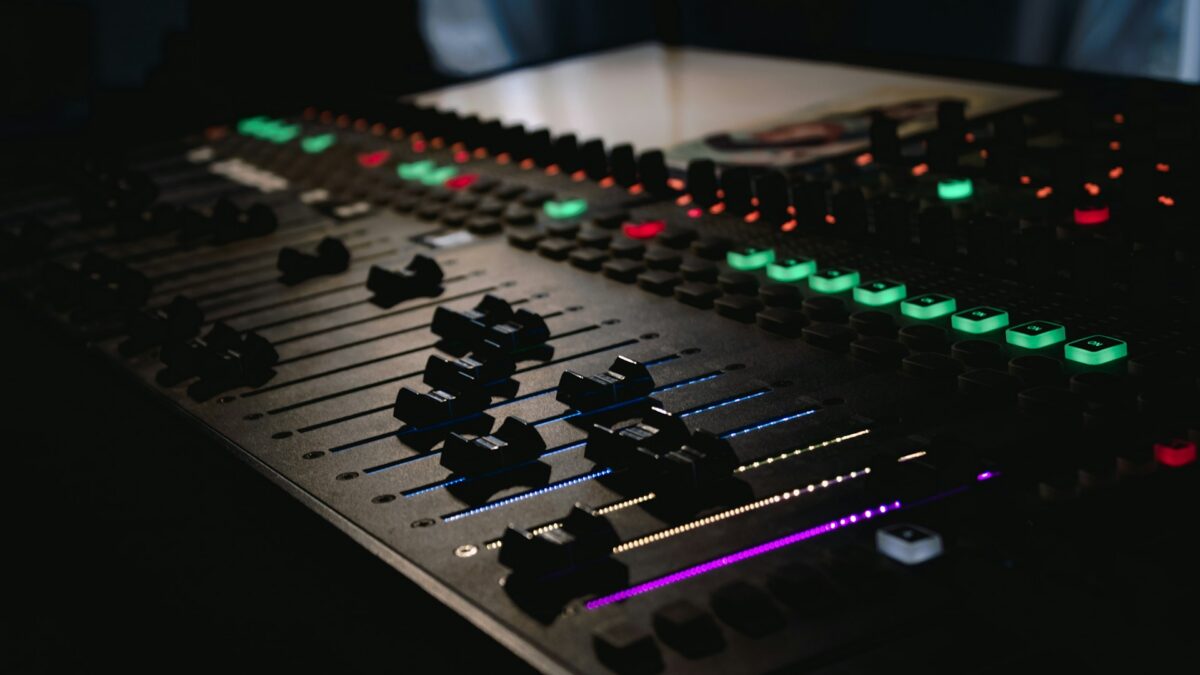
Digital mixers change the workflow in ways that matter a lot for churches. The headline feature is scene recall. A volunteer can walk in on Sunday morning, press one button, and have every channel set for the service, with motorized faders sliding to their saved positions automatically. For a team that relies on rotating volunteers, that alone can be worth the upgrade.
Beyond recall, digital boards pack processing into every channel: equalization, compression, gating, and effects that would cost a fortune as separate analog gear. They offer flexible routing, which makes creating that separate live stream mix we always recommend far easier. Many support wireless mixing from a tablet, so a technician can walk the room and tune the sound from where the congregation actually sits. And most can multitrack record the service, so you can rehearse and refine your mix during the week using real service audio.
The Volunteer Trap to Avoid
Here is the mistake we see most often. A church buys an impressive digital console, and then discovers their volunteer team finds it too complicated to run. The more powerful the board, the more training it takes, and a console nobody can operate confidently on Sunday is a step backward, not forward.
The fix is to match the console to your team’s current skill level while leaving room to grow. There is a wide range of digital boards in 2026, from simple compact units built for volunteers to large format consoles for full production teams. Picking the right point on that spectrum is more important than buying the most powerful board you can afford. This is exactly the kind of decision where matching gear to your people pays off, the same principle behind training a volunteer team that sticks around.
Signs It Might Be Time
A few practical signals that your Arizona church may be ready for digital. Your services have grown more complex, with more inputs, more musicians, and more moving parts than your analog board handles gracefully. You have started live streaming and need a separate broadcast mix that analog makes awkward. Different volunteers run sound each week and you are tired of resetting the board every time. Or you are moving toward networked audio, where digital consoles integrate far more naturally.
If several of those ring true, digital is probably worth the investment. If none of them do, your analog board may still be the right tool, and there is no shame in that.
Plan the Whole System, Not Just the Board
A console upgrade rarely lives in isolation. The board connects to your microphones, your speakers, your monitors, your stream, and increasingly your network. Swapping the console without considering the rest of the chain can leave you with a powerful board bottlenecked by aging gear around it. That is why we look at the whole AVL system when a church is weighing a console upgrade, so the investment actually delivers the improvement you are hoping for.
Let Us Help You Get It Right
The move from analog to digital can transform your church’s sound and make your volunteers’ lives easier, but only if you choose a console that fits your team and integrates with your system. We are glad to help you find that fit.
Contact Brilliance AV and we will help you decide whether it is time to upgrade and which console makes sense for your church.
About Brilliance AV
Brilliance AV is a church AVL design and installation company based in Tempe, Arizona, serving churches across the Phoenix Valley. We help worship centers choose, install, and get the most from their audio, video, and lighting systems. Call us at (480) 903-4432, email hello@brillianceav.com, or reach out through our contact page.