
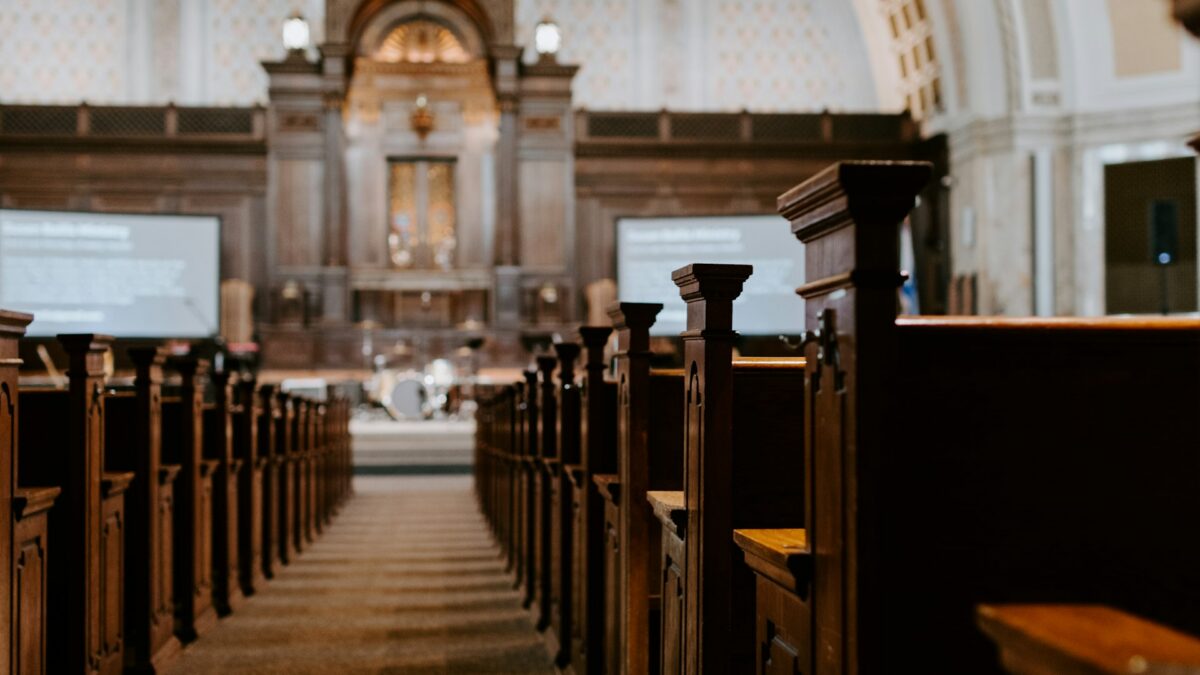
You spent good money on speakers and microphones, but people still say they cannot understand the sermon. Words seem to smear together, music turns to mush, and the harder you push the volume, the worse it gets. If that sounds familiar, your problem probably is not the sound system at all. It is the room.
What Actually Causes That Echoey Sound
Every worship space has a natural reverberation time, which is how long sound keeps bouncing around after the source stops. Hard, flat surfaces are the culprits: drywall, glass, concrete, tile, and tall vaulted ceilings all reflect sound energy back into the room instead of absorbing it. Those reflections stack on top of the direct sound coming from your speakers, and the result is that muddy, washed out quality.
Here in the Phoenix Valley, we see this constantly. Many newer Arizona churches meet in metal buildings, converted retail spaces, or big rectangular multipurpose rooms with polished concrete floors. Those surfaces look clean and modern, but acoustically they are about the worst thing you can build a sanctuary out of. The good news is that reverb is fixable, and you do not have to gut the building to do it.
Absorption Is the First Fix
The go to solution for echo is sound absorption. Acoustic panels, usually a dense mineral wool or fiberglass core wrapped in fabric, let sound waves pass into the material where they get trapped instead of bouncing back. Placing panels on the large flat walls, especially the ones that face each other, breaks up the back and forth reflections that create flutter echo.
You do not need to cover every wall. A trained ear can identify the primary reflection points, treat those first, and get most of the improvement for a fraction of the cost. Soft furnishings help too. Heavy curtains, carpet runners in the aisles, and padded chairs instead of hard pews all pull energy out of the room.
Do Not Forget the Ceiling and the Corners
Tall ceilings are one of the biggest reverb sources in Arizona sanctuaries, and you cannot exactly hang curtains up there. This is where acoustic clouds come in, which are panels suspended horizontally from the ceiling that catch reflections before they travel across the room. For the low frequency boom that builds up in room corners, bass traps do the heavy lifting. Bass energy loves to pile up in corners, and if your worship music feels boomy or the kick drum turns to a rumble, corner treatment usually helps.
Treatment and Tuning Work Together
Here is the part a lot of churches miss. Acoustic treatment and system tuning are two halves of the same job. Once the room is under control, a technician can tune your speakers and set the system up to take advantage of the improved acoustics. Trying to fix a bad room by only adjusting the mixing board is a losing battle, and it is often why a church feels like their sound system keeps feeding back no matter how careful the operator is. A better room makes every other part of your audio chain work harder for you.
It also makes your volunteer team’s job dramatically easier. When the room is not fighting them, running a clean soundcheck before service becomes routine instead of stressful.
What This Looks Like for an Arizona Church
Every room is different, so there is no one size fits all panel count. A small storefront church might need a dozen well placed panels and a couple of bass traps. A large worship center with a two story ceiling is a bigger project that benefits from a proper acoustic analysis first. The key is measuring the space, identifying the real problem frequencies, and treating strategically rather than throwing foam at the walls and hoping.
Aesthetics matter too. Modern acoustic panels come in fabric colors and printed designs that blend into your stage design, so you can solve the echo without making your sanctuary look like a recording studio. Some Phoenix Valley churches even build treatment into their stage and set design so it does double duty as decor.
Ready to Actually Understand the Sermon Again
If your congregation is straining to hear, the fix is closer and more affordable than you think. A room that is acoustically balanced makes your existing gear sound better, keeps volume in check, and helps every word land. That is worth doing right.
Want to know what is really going on in your sanctuary? Contact Brilliance AV and we will help you diagnose the room and build a treatment plan that fits your space and your budget.
About Brilliance AV
Brilliance AV is a church AVL design and installation company based in Tempe, Arizona, serving churches across the Phoenix Valley. From acoustics and sound to video, lighting, and networking, we help worship centers sound and look their best. Call us at (480) 903-4432, email hello@brillianceav.com, or reach out through our contact page.