
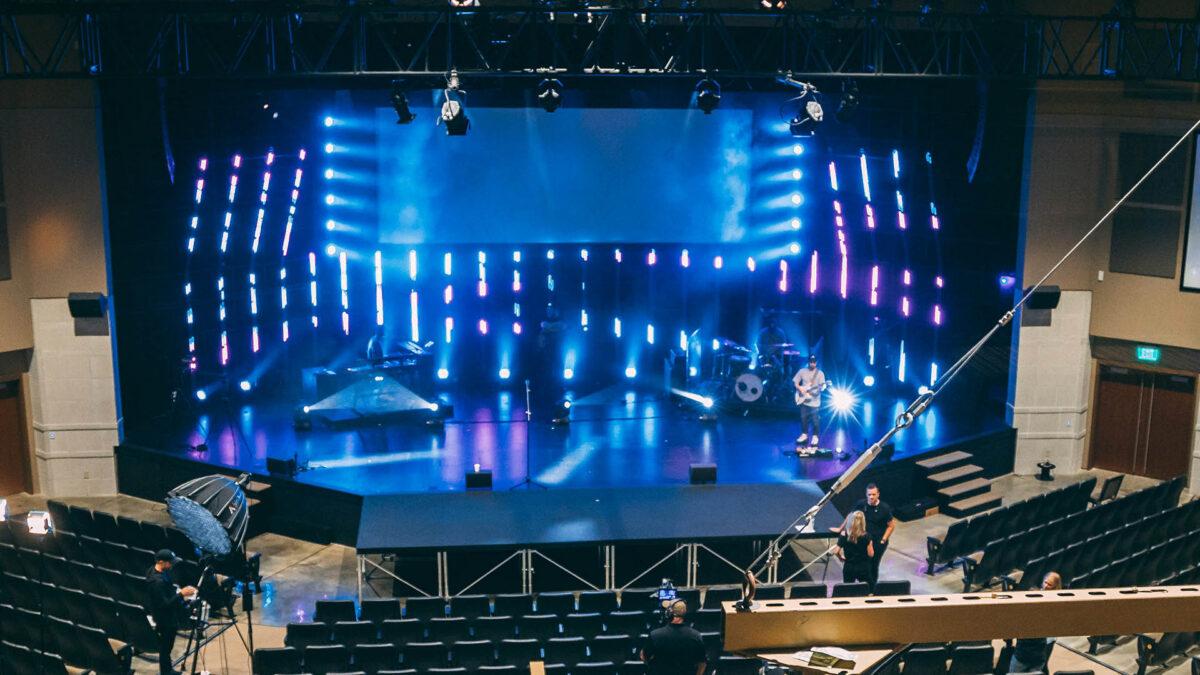
If your worship center sounds great on stage but muddy or uneven in the back rows, or if feedback suddenly appears during energetic worship, the issue might not be your gear — it’s likely that your PA system needs tuning. At Brilliance AV, we help many Phoenix Valley churches improve their sound by properly tuning their PA systems, and the results are often dramatic.
Tuning your PA system is the process of aligning speakers, correcting for room acoustics, and creating a consistent, clear listening experience for every seat in your worship center. It bridges the gap between raw, unbalanced audio and a professional, “finished” sound that supports both your congregation and your worship team.
Why Tuning Your PA System Is Essential for Arizona Churches
Arizona worship centers come in all shapes and sizes — from small multi-purpose rooms to larger auditoriums — and each has unique acoustic challenges caused by hard surfaces, high ceilings, and reflective floors. Here’s why proper PA tuning makes a big difference:
- Consistent Sound Coverage: Tuning ensures the same volume level, frequency response, and clarity reach every seat, so no one in the back feels left out.
- Prevent Feedback and Maximize Gain: By identifying and managing problem frequencies, you can run the system louder before feedback occurs — crucial during powerful worship moments.
- Correct Room Acoustics: Many Arizona churches have “boomy” low end or overly bright reflections. Tuning with EQ helps compensate for these issues rather than fighting them during every soundcheck.
- Verify System Integrity: Tuning includes testing every speaker (mains, subs, fills) to confirm all drivers are working and properly connected.
- Create a Solid Foundation: A well-tuned system gives your sound team a neutral, balanced starting point, making it much easier to achieve a great mix quickly.
Essential Components of PA System Tuning
Effective tuning involves three main steps:
- Measurement
Using professional tools like Smaart or Open Sound Meter, we compare the sound being sent from the console to what the audience actually hears in different parts of the room. - Speaker Alignment
Setting the correct delays and levels so sound from all speakers arrives at the listener at the same time, eliminating phase issues and creating a cohesive sound field. - Equalization (EQ)
Applying targeted EQ to smooth out uneven frequency responses caused by the room or equipment, resulting in clearer vocals and more balanced music.
The Bottom Line for Arizona Churches
A properly tuned PA system doesn’t just sound better — it makes worship more engaging and accessible for everyone in the room. Whether you’re in a small leased space or a large permanent worship center, tuning removes distractions so the focus stays on the message and the music.
At Brilliance AV, we specialize in tuning PA systems for churches across the Phoenix Valley. Our process includes on-site measurement, alignment, EQ adjustments, and volunteer training so your team can maintain the improvements week after week.
We also include ongoing support through our AVL Maintenance Packages, ensuring your system continues to perform at its best as your church grows.
Ready to hear the difference a well-tuned PA system can make in your worship center?
Contact Brilliance AV today to schedule a tuning session. Let’s make your audio clear, consistent, and ready for every service in 2026.
Keywords: church PA system tuning Arizona, church audio solutions Arizona, worship audio tuning Phoenix, church AV company Phoenix, church AV setup Arizona, reliable church audio, church sound system Arizona, PA tuning for churches Arizona, improving church acoustics Arizona, church AVL upgrades Arizona, Arizona Church AVL Company, AVL Phoenix. Improve your church PA system with professional tuning in Arizona. Brilliance AV helps Phoenix Valley worship centers achieve clear, consistent sound. Contact us today!
Let's build irresistible experiences.
Connect With Us
Planning a project? Share your vision with us through this form, and we'll connect with you shortly.
Portable PA Systems for Small Churches and Church Plants: What You Actually Need

Church Presentation Software: ProPresenter and the Alternatives, Compared
How to Light a Worship Stage: A Beginner’s Guide for Phoenix Churches

How Much Internet Speed Does Your Church Need to Live Stream?
Does Your Church Need an Assistive Listening System? ADA and Hearing Help, Explained
How to Stop Microphone Feedback in Your Church Before It Ruins the Service
Can My Church Legally Stream Worship Songs? CCLI and Streaming Licenses, Explained

Does Your Church Production Team Need a Headset Intercom System?