
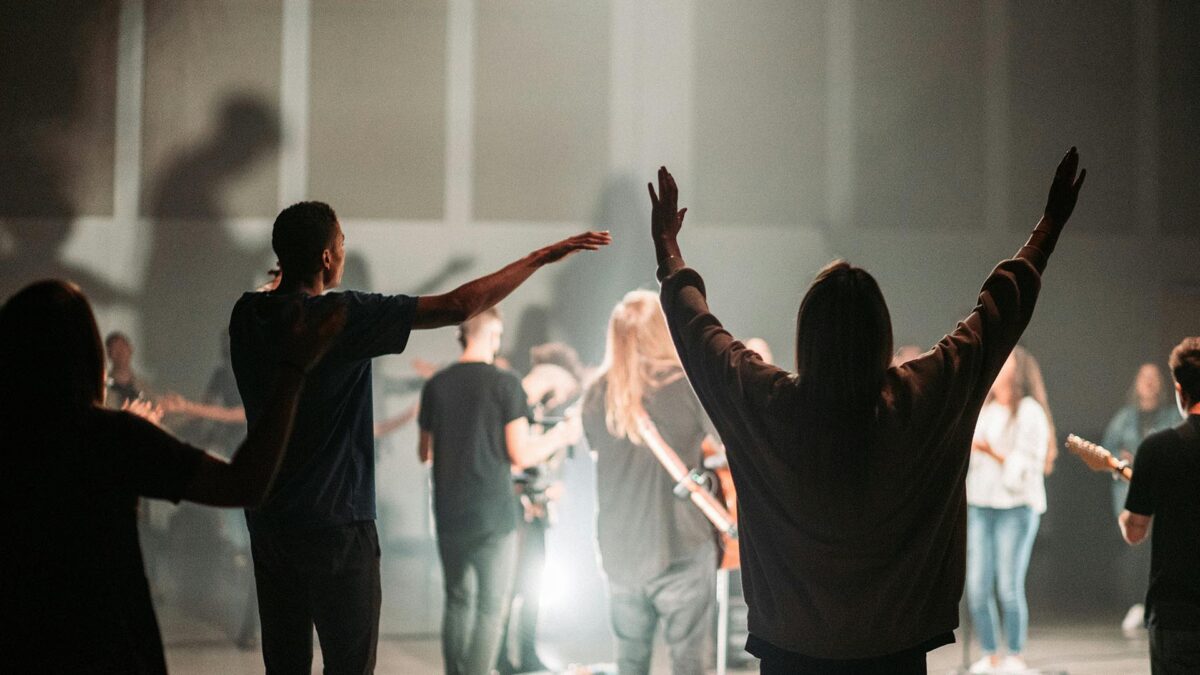
By the team at Brilliance AV — Church Plant AVL design and installation specialists
Here's a stat that might surprise you: Phoenix is the 9th most unchurched city in America. And Maricopa County — the greater Phoenix metro — is the single fastest-growing county in the United States. New communities are popping up across the East Valley, West Valley, and beyond at a pace that's genuinely hard to keep up with.
The mission field in Arizona is enormous. And faithful men and women are answering the call — planting churches in school gyms, movie theaters, strip malls, community centers, and any other space that will hold a few hundred people and let them worship without a noise complaint. We've seen it all.
We've also seen what happens when church plants get their AVL right — and what happens when they don't. The difference is significant. A church plant with clear audio, readable displays, and decent lighting communicates intentionality and professionalism that helps first-time guests feel comfortable enough to come back. A church plant where the pastor's mic is cutting in and out and the lyrics are barely visible on a bright Sunday morning communicates something else entirely. Not the impression you're working so hard to make.
This guide is for Arizona church planters who want to get their AVL right from day one — without spending money they don't have, buying gear they'll regret, or having to rebuild the whole thing in two years because nobody planned ahead.
Let's get into it.
First Things First: What Does "AVL" Even Mean for a Church Plant?
AVL stands for Audio, Video, and Lighting — the three core technology systems that shape how your congregation experiences your services. For a church plant, that typically means:
- Audio: The microphones, mixing console, speakers, and monitoring system that make sure your pastor's voice and your worship team are heard clearly by every person in the room
- Video: The displays or projection system that shows lyrics, scripture, and graphics — plus cameras and streaming infrastructure if you're reaching an online audience (you should be)
- Lighting: Stage lighting so your worship leader isn't a silhouette against a bright background, and house lighting so your congregation can actually read their Bibles
For a church plant specifically, there's one more critical variable that shapes every one of these decisions: portability. Most Arizona church plants don't own their building. They're setting up and tearing down their entire technology environment every single week — sometimes in under two hours, with a volunteer team that's also running check-in, greeting guests, and managing the nursery.
Every AVL decision you make as a church plant needs to be evaluated through two lenses simultaneously: does it sound/look/work great? And can our volunteers set it up in a school gym on Sunday morning without losing their minds?
With that framework established, here are the most important AVL considerations for Arizona church plants in 2026.
1. Assess Your Space Before You Buy Anything
This sounds obvious. It isn't. We've talked to church plants that bought a speaker system before they secured a venue — and then discovered the venue's acoustics, ceiling height, or room shape made that system completely wrong for the space. Don't be that church plant.
Before spending a single dollar on gear, understand the physical environment where you'll be worshipping:
- Room dimensions and shape — A long, narrow school auditorium has completely different speaker coverage needs than a wide, square multipurpose room. The distance from stage to the back row determines what kind of speaker system will actually reach everyone.
- Ceiling height — Low ceilings in a multipurpose room create very different acoustic challenges than the high ceilings of a performing arts center or a traditional school auditorium. Ceiling height also affects where you can position lighting and what fixtures are practical.
- Acoustic character — Is the room naturally reverberant (hard floors, parallel walls, high ceilings) or is it already somewhat dampened? A room that sounds like a cave with no system running will still sound like a cave with an expensive system — unless acoustics are addressed.
- Power availability — Where are the electrical outlets? How many circuits are available? Can you run dedicated power for audio and lighting without tripping breakers? Nothing kills a Sunday morning like a tripped breaker during the first song.
- Storage — If you're portable, where is your gear living between Sundays? A storage closet at the venue? A trailer? Your worship pastor's garage? This affects how your system is packaged, cased, and organized.
- Lighting conditions — Does the room have windows that let in morning light? Is the stage area dark or bright? Arizona sunshine is relentless, and ambient light from uncovered windows can make displays and projection completely unreadable during a 10 AM service.
If you're not sure how to evaluate your space, reach out to us. We'll walk through it with you — no obligation, just honest conversation about what your space needs.
2. Budget Wisely — And Plan the Whole System First
Church plant budgets are real and they're limited. We understand that. But there are two equally dangerous mistakes when it comes to church plant AVL budgeting, and they pull in opposite directions:
Mistake #1: Spending too little and buying gear you'll replace in two years. Consumer-grade speakers, bargain-bin wireless mics, and cheap Chinese LED walls seem like smart stewardship on paper. In practice, they produce inferior results, fail more often, and usually get replaced within 18–24 months — meaning you essentially bought the system twice.
Mistake #2: Overspending on gear your church plant doesn't yet need. A 48-channel digital console is impressive. It's also completely unnecessary for a six-piece worship team and will take your volunteer sound tech a full year to feel remotely comfortable operating. Don't buy for the church you hope to be in five years if it means you can't pay your worship leader today.
The sweet spot is buying professional-grade gear right-sized for your current situation, chosen within a plan that accounts for where you're going. A $15,000–$30,000 portable church AVL system, thoughtfully designed and professionally configured, will serve a church plant of 50–200 people extremely well and scale with you as you grow. We wrote a whole blog on why buying piece by piece almost always costs more — it's worth reading before you make any decisions.
Know your total budget before you start picking gear. Then design the complete system within that budget rather than buying one piece at a time and hoping it all works together. It almost never does.
3. Build Your Audio System Around Reliability and Simplicity
Audio is the most important technology investment a church plant makes. Full stop. Your congregation will forgive mediocre lighting. They'll squint at a slightly dim screen. But if they can't hear the pastor clearly — if the audio is distorted, muddy, plagued with feedback, or cutting in and out — they disengage. And for a first-time guest, unclear audio is often the thing that tips the decision not to come back.
For a portable church plant system, here's what a solid audio setup looks like:
The Mixing Console: Go Digital, Go Compact
For church plants, we consistently recommend the Allen & Heath CQ Series — specifically the CQ-18T or CQ-20B — as the starting point for portable church audio. Here's why it's such a strong fit for the church plant environment:
- Compact and portable — the CQ-18T fits in a backpack. Genuinely. It's small enough to set up on a folding table at the back of a school gym without needing a dedicated front-of-house position.
- Built-in Feedback Assistant — automatically identifies and suppresses feedback before it ruins your service. For a volunteer who's also watching the livestream, managing ProPresenter, and answering texts from the worship leader, this is invaluable.
- Built-in Gain Assistant — takes the technical stress out of setting proper input levels for each microphone. Your volunteer doesn't need to know what "gain staging" means to set the system up correctly.
- Wi-Fi control via tablet — your sound tech can walk the room during worship and adjust the mix based on what the congregation actually hears, not what it sounds like from behind the console
- Scene recall — save a complete Sunday service setup and recall it with one button press. Setup time drops dramatically when your volunteer isn't rebuilding the mix from scratch every week.
- SD card recording — record your sermon directly from the console for podcast or archive distribution, no extra gear required
As your church grows and needs more channels, the Allen & Heath Qu Series (Qu-5, Qu-6, Qu-7) offers a natural upgrade path with more inputs, surface-based control, and Dante networking capability — all on the same Allen & Heath platform your volunteers already know.
Wireless Microphones: Don't Cheap Out Here
Wireless mic failures during a service are one of the most jarring, credibility-damaging things that can happen in a church plant environment. When the pastor's mic cuts out mid-sermon, the room feels it. Every person in that space wonders, at some level, whether this church has its act together.
Invest in professional wireless from day one. The Shure SLX-D+ system is our top recommendation for portable church plants in Arizona's RF-dense environments. The Phoenix metro has significant wireless frequency congestion — multiple churches, venues, schools, and businesses all competing for the same RF spectrum. The SLX-D+ features a 138MHz tuning range, automatic frequency selection, and AES-256 encryption, which means it finds clean frequencies automatically and holds them reliably. Up to 8 hours of battery life per charge means you can run two full services without a battery change mid-service.
Start with two channels — one for the pastor (handheld or headset) and one for the worship leader. Add channels as your team and budget grow. This is one of those "buy it once, buy it right" decisions.
Speakers: Coverage Over Volume
The goal of a church plant speaker system is even coverage — every seat hearing the same volume and clarity — not raw power. For most portable church plant environments in the 50–200 seat range, a pair of professional powered speakers like the QSC K12.2 delivers outstanding coverage, built-in DSP for optimized performance right out of the box, and the rugged reliability needed to survive weekly setup and teardown cycles.
For churches in longer rooms where the back rows aren't getting adequate coverage, a pair of delay speakers on stands mid-room can fill the gap without cranking the main speakers to uncomfortable levels.
One note specifically for portable Arizona churches: if your venue has a hard floor, parallel walls, and minimal soft furnishings — which describes most school gyms and community centers — you're going to have a naturally reverberant acoustic environment that can make your system sound muddy regardless of speaker quality. Portable acoustic panels (yes, they exist and yes, they work) placed strategically around your stage area can make a dramatic difference in clarity without requiring permanent installation. Ask us about portable acoustic solutions as part of your system design.
Stage Monitoring: In-Ears Change Everything
In a portable church environment, stage volume control is critical. A loud stage — floor wedge monitors cranked up, drums bleeding everywhere — makes your front-of-house mix harder to control, pushes your room into feedback risk territory, and creates a chaotic acoustic environment that your volunteers can't manage reliably week to week.
In-ear monitor (IEM) systems solve this at the root. When your worship team can hear a clear, personalized mix in their ears, they stop needing volume on stage. The room gets quieter, your mix gets cleaner, and setup becomes more consistent because you're not chasing stage volume variables every week.
The Shure PSM300 is a solid starting point for a portable IEM system. Pair it with the Allen & Heath CQ console's aux outputs and your worship team gets individual monitor mixes without needing a separate monitor console. Simpler setup. Happier musicians. Cleaner mix. Worth every penny.
4. Video Displays: Making Lyrics and Content Visible in Any Space
Your congregation needs to see the lyrics. It sounds simple. It's actually one of the most space-dependent, variable challenges in portable church AVL — because every venue has different ambient light, different ceiling height, different sight lines, and different constraints on where you can position a screen.
Projection vs. LED Displays for Portable Churches
Both projection and LED displays can work in portable church environments. Here's how to think about the decision:
Projection is more affordable upfront, packs down more compactly, and works well in rooms that have some control over ambient light. The challenges: Arizona Sunday morning light is brutal, and projectors lose significant brightness and contrast in rooms with uncovered windows. Lamp replacement is an ongoing cost and a potential single point of failure. Throw distance matters — if the room doesn't give you enough distance from projector to screen, you're limited in screen size.
LED displays — either a dedicated LED wall or a pair of large-format LED panels — produce dramatically better results in high-ambient-light environments because their brightness output is measured in hundreds to thousands of nits versus the much lower effective brightness of projection in ambient light. The investment is higher and the system is heavier and more complex to set up, but for a church plant that's doing two services in a bright room, the image quality difference is genuinely significant. We've helped church plants across Arizona navigate this decision, and the right answer depends entirely on your specific venue. Read our full LED wall guide for Arizona churches for more detail.
Screen Size and Placement
Whatever display technology you choose, size and placement matter as much as brightness and resolution. A screen that's too small leaves the back rows squinting. A screen positioned too low gets blocked by the heads of people sitting in front. A screen angled incorrectly creates hot spots where glare makes content unreadable.
Portable stands and truss systems allow church plants to position displays at the correct height and angle for their specific venue — and adjust when the venue changes. If your church is hopping between locations or expects to move into a different building as you grow, portable screen positioning hardware is a smart investment from day one.
ProPresenter and Your Content Workflow
Most Arizona church plants use ProPresenter as their presentation software. It's the industry standard for church lyrics, graphics, and video playback, and it's genuinely excellent. Make sure your video system — switcher, display outputs, resolution — is configured to work cleanly with ProPresenter's output settings. This is something we configure as part of every system we install, and it eliminates the "why does the screen look weird" troubleshooting that plagues churches that set things up without professional configuration.
5. Livestreaming: Your Online Congregation Is Real Ministry
If your church plant isn't livestreaming, you're leaving a significant portion of your ministry reach on the table. Homebound members, traveling families, people who found you on Instagram but aren't ready to walk in the door yet, new guests who want to "check you out" before they commit to visiting in person — your online audience is real, and it matters for your mission.
The good news: a solid portable livestream setup doesn't have to be complicated or expensive. The better news: you probably already have most of what you need if your audio and video systems were designed with streaming in mind.
Camera Options for Church Plants
For church plants with limited volunteers and tight budgets, a single-camera setup is a completely legitimate starting point. One well-positioned PTZ camera capturing a clean wide shot of the stage — with a good audio feed from your mixing console — is infinitely better than nothing and will serve your online audience well.
PTZ cameras like the PTZOptics Move 4K or Canon CR-N series are particularly well-suited to portable church environments because they can be positioned and recalled to preset shots without a camera operator standing behind them. Your livestream volunteer can run the camera from the same position where they're managing the stream — no dedicated camera crew required.
As your church grows and your volunteer team expands, adding a second or third camera position gives you the multi-angle production value that makes online services more engaging. Plan your initial camera positions and cable infrastructure to support additional cameras later, even if you only start with one.
Streaming Encoders and Platform Setup
Getting your video and audio from the venue to YouTube, Facebook Live, or your church's website requires a streaming encoder. For church plants, hardware encoders — dedicated devices that handle encoding reliably without depending on a volunteer's laptop staying awake and focused — are the more dependable choice. We configure encoders as part of every livestream system we set up so your volunteer can start a stream with one button press rather than navigating software settings five minutes before service starts.
Internet Connectivity: Don't Overlook This
The most common livestream failure point for portable churches isn't the camera or the encoder — it's the internet connection. A school gym's guest Wi-Fi is not a reliable streaming platform. Before your first service, verify that your venue provides adequate, consistent upload bandwidth for the stream quality you need (at minimum, 10–15 Mbps upload for a 1080p stream). If the venue's connection isn't reliable, a cellular bonding solution — a device that combines multiple cellular connections for stable streaming — is a worthwhile backup investment that has saved more than a few portable church livestreams from complete failure.
6. Stage Lighting: Don't Skip This One
We know. You're planting a church. There are a thousand things competing for your budget. Lighting feels like a luxury.
It isn't. And here's the practical reason why: if you're livestreaming, your lighting is what makes your camera work. Without adequate front lighting on your pastor and worship team, even a professional camera produces flat, dim, unflattering footage that makes your online stream look like it was filmed in a cave. Bad lighting doesn't just hurt the in-person experience — it tanks your online production quality too.
The good news: a basic portable lighting package that makes a real difference doesn't require a massive investment. Here's what a practical portable lighting setup for an Arizona church plant looks like:
Face Lighting: The Non-Negotiable Starting Point
Your single highest-impact lighting investment is proper front-of-stage face lighting — fixtures that illuminate your pastor and worship team from the front at the correct angle, producing natural-looking light that's flattering in person and on camera. Without it, your stage subjects are backlit or side-lit and look like shadows against whatever is behind them.
LED ellipsoidal or fresnel fixtures on portable stands, positioned in front of and above the stage at roughly a 45-degree downward angle, create the clean face lighting that makes everything look more professional instantly. This is the single upgrade that has the most visible impact on first-time guests and online viewers alike.
Color Wash Lighting: Atmosphere Without Complexity
A few LED par cans or wash fixtures — positioned to wash the stage and backdrop with color — allow you to create atmosphere that shifts with the tone of your service. Warm amber during intimate worship. Cooler tones for reflective moments. This doesn't require a lighting programmer or a complex console. Simple DMX presets mean your volunteer can change the entire stage look with a single button press.
For portable church plants where gear takes a beating through weekly setup and teardown, mid-range fixtures from brands like Chauvet Professional or ADJ provide professional results without the heartbreak of damaging fixtures that cost thousands of dollars each. Buy fixtures that are durable, replaceable, and serviceable — not the most feature-rich option on the market.
House Lighting
In a venue you don't own, you typically work with whatever house lighting the space provides. If the venue's lights are controllable — on a dimmer or a basic switch — coordinate with your host venue so you can adjust lighting levels during worship versus sermon versus response. If the venue's house lights are fixed and fluorescent, portable uplights or architectural wash fixtures can supplement the environment and make the room feel more intentional without requiring any modifications to the venue's electrical system.
7. Setup and Teardown: Design for Your Volunteers, Not for a Specification Sheet
This is the consideration that most AVL guides written by people who don't run portable churches completely miss. In a permanent church building, the system is installed, it doesn't move, and setup time isn't a factor. In a portable church plant, setup and teardown time is one of the most important variables in the entire system design.
If your system takes three hours to set up and two hours to tear down, you need a large, dedicated volunteer team every single week — and you'll burn those volunteers out within a year. If your system is designed for fast, consistent, repeatable setup, a small team can have you ready to worship in 90 minutes or less.
Here's how professional portable church AVL design addresses this:
- Rack-based systems with labeled, pre-terminated connections — everything that can be pre-connected in a rack should be. Your volunteer plugs in a few trunk cables, not dozens of individual connections.
- Color-coded and labeled cabling — every cable should be labeled at both ends. Your volunteer shouldn't have to think about which XLR goes where. It should be obvious.
- Road cases with custom foam inserts — gear that's properly cased survives weekly handling, stays organized, and loads faster because everything has a designated spot.
- Digital console presets — one button recall for the complete Sunday setup means your sound tech is mixing, not rebuilding, within minutes of connecting the console.
- Camera position markers — simple floor tape marks showing exactly where stands go eliminates the guesswork and ensures your camera angles are consistent week to week.
- Lighting presets — DMX scenes pre-programmed for each service moment mean your lighting volunteer is pressing buttons, not adjusting individual fixtures.
When we design portable church systems for Arizona church plants, setup efficiency is a primary design criterion — not an afterthought. Because the best system in the world is useless if your volunteers are exhausted before the first song starts.
8. Plan for Scalability — But Buy for Today
Arizona church plants grow. It's one of the beautiful realities of planting in one of the most unchurched, fastest-growing metro areas in the country. The church you are today is not the church you'll be in three years. Your AVL system needs to account for that — but it doesn't mean buying a system for 500 people when you're currently running 80.
Scalability in AVL planning means:
- Choosing a mixing console with room to grow — the Allen & Heath CQ-18T handles up to 16 channels. If your worship team is likely to expand, the CQ-20B or Qu Series gives you more headroom without requiring a complete console replacement.
- Investing in infrastructure that carries forward — a quality road case, a well-organized rack, and properly labeled cabling all move with you when you grow into a permanent space.
- Selecting wireless systems with room for additional channels — starting with two wireless channels and planning for four or six means your initial rack design accommodates additional receivers without rework.
- Designing your speaker system to accept delay or fill speakers later — if you start with a main PA and anticipate adding delay fills or rear fills as you move into larger spaces, design the signal chain to support that from day one.
The goal is a system where every upgrade adds to what you have rather than replacing it. Thoughtful planning at the beginning makes that possible. Our design process at Brilliance AV always includes a five-year growth conversation so the system we build for you today doesn't become a constraint for where you're going tomorrow.
9. Train Your Volunteers Like the Ministry Depends on It — Because It Does
Your AVL system is only as good as the people running it every Sunday morning. And in a church plant, those people are usually enthusiastic volunteers who love Jesus, love your church, and are figuring out the technology as they go. That's not a criticism — it's the reality of church planting, and it means volunteer training isn't a nice-to-have. It's essential.
Here's what effective volunteer training for a portable church AVL system looks like:
- System-specific documentation — a simple, visual setup guide (not a technical manual) showing exactly how your specific system connects, powers on, and configures for a typical Sunday. Laminate it and stick it in the road case.
- Scenario-based training — run through not just the normal Sunday setup, but the things that can go wrong and how to respond. What do you do if the pastor's mic is cutting out? What if the screen goes black? What if the livestream drops? Your volunteers should know the answers before they ever face those situations live.
- Repeated practice before the first service — a full dress rehearsal of setup, operation, and teardown, with the actual volunteer team, before your first public service is worth more than any amount of technical documentation.
- A clear escalation path — your volunteers should know who to call if something is beyond their ability to fix. That's where our ongoing service and support comes in. We're a phone call away when your team runs into something they haven't seen before.
When we complete an installation for a church plant, volunteer training is part of the delivery — not a separate line item or an afterthought. Because handing over gear without training isn't installation. It's just delivery.
10. Work with a Professional — But Make Sure They Understand Church Plants
The last consideration is the most important one: who you work with to design and build your system matters enormously. Not every AVL integrator understands the specific constraints, priorities, and culture of a church plant environment. There's a significant difference between someone who installs corporate conference rooms and someone who has designed portable church systems for dozens of church plants and understands the weekly rhythm of setup, service, teardown, repeat.
Here's what to look for in an AVL partner for your church plant:
- Church-specific experience — have they designed systems specifically for churches? Do they understand the volunteer operator context, the worship team dynamics, the ministry use cases?
- Portable system expertise — designing a portable system that's efficient to set up and reliable week after week requires specific knowledge that many integrators don't have
- Honest budget conversations — a good partner tells you what you need and what you don't, and designs within your real budget rather than upselling you to a system that doesn't serve your situation
- Long-term relationship, not a transaction — your church plant is going to grow and change. You need a partner who will still be there when you move into a permanent space, when you add services, when your worship team doubles in size
- Arizona presence — someone who understands the local environment, can be on-site when needed, and knows what working in the Phoenix heat means for equipment selection and installation
We'd like to think that describes Brilliance AV. We've worked with church plants across the Phoenix metro and beyond, and we genuinely love being part of the story of a new church finding its footing. There's nothing quite like being in the room for a church plant's first service where the audio is clean, the lyrics are readable, and the pastor can focus on the message instead of worrying about the technology.
That's the moment we work toward with every church plant we serve.
Church Plant AVL Budget Ranges: What to Expect in Arizona
We believe in transparency, so here's a practical framework for what a professionally designed portable church plant system costs in Arizona. These ranges include system design, equipment, professional configuration, cabling, road cases, and volunteer training — not just a pile of boxes from an online retailer.
| System Level | Congregation Size | What's Included | Investment Range |
|---|---|---|---|
| Essential Start | Up to 100 people | Compact digital console, 2 wireless channels, powered main speakers, basic stage monitoring, projection or large-format display, 2–4 stage lights, 1 PTZ camera + streaming encoder | $15,000–$25,000 |
| Growing Plant | 100–200 people | Mid-range digital console, 4 wireless channels, main PA + subwoofer, IEM system for worship team, LED wall or dual displays, expanded lighting package, 2-camera stream setup | $25,000–$50,000 |
| Established Plant | 200+ people | Full-featured console, 6+ wireless channels, line array or expanded PA, full IEM system, LED wall, multi-zone lighting, multi-camera production, streaming infrastructure, acoustic treatment | $50,000–$100,000+ |
Every church plant is different, and these are ranges, not quotes. The only way to get an accurate picture of what your specific system needs is a real conversation about your space, your team, your worship style, and your goals. We'd love to have that conversation with you.
Frequently Asked Questions: AVL for Arizona Church Plants
We're meeting in a school gym. Can a portable system actually sound good in that environment?
Yes — but it requires the right system and some acoustic management. School gyms are acoustically challenging (hard floors, parallel walls, high ceilings, lots of reflective surfaces), but a properly designed speaker system combined with some portable acoustic treatment and a well-tuned digital console can produce genuinely excellent results. We've done it many times. The key is designing the system for the room, not just buying speakers and hoping for the best.
Should we buy used gear to save money?
It depends on the gear and the source. Professional-grade used equipment from reputable brands can be a legitimate way to stretch a church plant budget — a two-year-old Allen & Heath or QSC product will still perform well. Consumer-grade or no-name used equipment is a different story. We're happy to advise on specific pieces of used gear if you want a second opinion before purchasing.
How do we handle RF interference with multiple wireless systems in a crowded venue?
This is a real issue in Arizona, particularly in Phoenix-area school venues where multiple events and organizations share the same RF environment. Professional wireless systems like the Shure SLX-D+ with wide-band frequency agility handle this much better than budget systems. Proper antenna placement and a coordinated frequency plan as part of your system design also make a significant difference. This is part of what we do when we design wireless systems for portable churches.
When should we start thinking about a permanent space?
That's a pastoral question more than a technology one — but from an AVL perspective, the answer is: design your portable system with your permanent space in mind from day one. The console, wireless systems, and core infrastructure you invest in for your portable setup should be sized and selected to carry forward into a permanent facility. This is a conversation we love having with church plants early in the process, so the portable system investment feeds the permanent system rather than being abandoned when you make the move.
Can Brilliance AV help us even if we're a very small church plant with a tiny budget?
Yes. We work with church plants at all stages and budget levels. Even if you're not ready for a full professional installation, a consultation to help you make smart purchasing decisions within your budget is something we're glad to do. We'd rather help you buy the right $15,000 system than watch you buy the wrong $15,000 system and rebuild it in two years. Reach out and let's talk.
Final Thoughts: The Technology Serves the Mission
If you're planting a church in Arizona, you're doing something that matters. You're bringing the gospel to one of the fastest-growing, most unchurched regions in the country. That mission deserves technology that serves it faithfully — not technology that distracts from it, fails during it, or exhausts the volunteers who make it happen every week.
Good AVL design for a church plant isn't about having the most impressive gear. It's about having the right gear — reliable, appropriate for your space, simple enough for your volunteers to operate with confidence, and designed with enough foresight that it grows with you rather than holding you back.
That's what we build at Brilliance AV. And we'd be honored to be part of your church's story.
Focus the many on the One. Everything else — the speakers, the screens, the lights, the cameras — exists to serve that single purpose.
Ready to talk about your church plant's AVL needs? Contact the Brilliance AV team for a no-pressure conversation. We'll give you honest answers, practical recommendations, and a clear picture of what's possible within your real budget. No jargon. No upselling. Just genuine expertise from a team that loves what Arizona church plants are doing.
Let's build irresistible experiences.
Connect With Us
Planning a project? Share your vision with us through this form, and we'll connect with you shortly.
Portable PA Systems for Small Churches and Church Plants: What You Actually Need
Church Presentation Software: ProPresenter and the Alternatives, Compared
How to Light a Worship Stage: A Beginner’s Guide for Phoenix Churches
How Much Internet Speed Does Your Church Need to Live Stream?
Does Your Church Need an Assistive Listening System? ADA and Hearing Help, Explained
How to Stop Microphone Feedback in Your Church Before It Ruins the Service
Can My Church Legally Stream Worship Songs? CCLI and Streaming Licenses, Explained
Does Your Church Production Team Need a Headset Intercom System?