
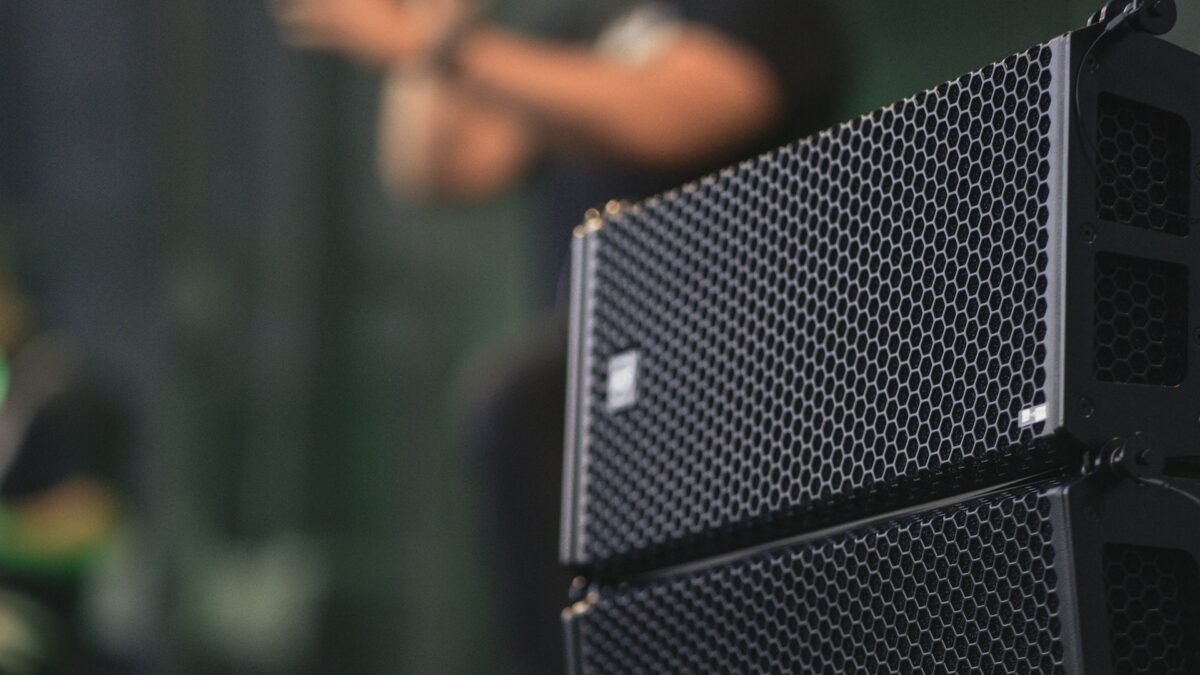
Ask five people whether your church needs a subwoofer and you’ll get five confident, contradictory answers. The drummer says obviously. The organist says absolutely not. Someone on the board heard subwoofers are “for concerts, not church.” Here’s the truth: it depends entirely on what your worship sounds like and what your current system can’t do. When churches get this right, nobody ever says “the subwoofer sounds great.” They say “worship feels different.” That’s the point.
What a Subwoofer Actually Does
Your main speakers are asked to reproduce everything from the sizzle of a cymbal to the thump of a kick drum. Physics makes the bottom octaves the hardest part: reproducing low frequencies at meaningful volume takes large drivers moving serious air. When full-range speakers are pushed to produce deep bass they weren’t designed for, two things happen. The low end sounds strained and woolly, and the rest of the mix suffers because the speakers are working at their limits.
A subwoofer takes over everything below roughly 80 to 100 Hz: kick drum weight, bass guitar foundation, the low octaves of keys and pads, and the felt-more-than-heard fullness that makes a modern worship mix feel complete. Freed of that burden, your mains instantly sound cleaner in the vocal range too. That second benefit surprises people: adding a sub is often the cheapest vocal clarity upgrade available.
Who Genuinely Needs One
If your worship features a full band, kick drum, bass guitar, synth pads, and your congregation sings along to contemporary arrangements, your music was produced and arranged assuming real low-end reproduction. Without a sub, you’re hearing about two-thirds of the arrangement. Churches with worship nights, youth services, or Christmas productions feel the difference even more.
If your services are speech, piano, choir, and traditional hymns on organ, be careful. A pipe organ’s real low end is its own magnificent thing, and a poorly integrated sub competes with it rather than helping. Speech-focused rooms genuinely may not need one at all. In fact, subwoofers reproducing HVAC rumble and podium thumps make speech worse. “No sub” is sometimes the professional recommendation, and we make it regularly.
Why Church Subwoofers Get a Bad Reputation
Almost every “subwoofers don’t belong in church” opinion traces back to a bad installation. The classic failures: a sub dropped in a corner where room modes make two rows boom while the rest hear nothing, no crossover management so mains and sub both reproduce the same frequencies and smear each other, and level set by enthusiasm rather than measurement so the sub calls attention to itself.
Placement matters enormously because low frequencies interact with the room’s dimensions. The same sub in two positions can sound like two different products. This is measurable, predictable physics, which is why sub placement and tuning is a design task, not a delivery drop-off. Done right, the low end is even across the seating area, the crossover is inaudible, and the sub disappears into the system. It’s the same discipline we described in why tuning your PA system matters, just applied to the bottom octaves.
The Arizona Wrinkle
Many Valley churches meet in multi-purpose buildings, converted retail spaces, and metal-framed structures. These rooms often have lightweight walls and roofs that resonate with low frequencies, meaning bass management isn’t just about sound quality, it’s about not rattling the building or bleeding into the nursery next door. Cardioid subwoofer configurations, which direct low end toward the congregation and cancel it behind, solve problems in these rooms that no volume knob can.
What About the Livestream?
Here’s a bonus most churches don’t expect: a properly integrated subwoofer improves your broadcast audio too. When mains strain to produce low end, the distortion they generate muddies the whole mix, including what your ambient mics capture for the stream. And when the room’s low end is handled cleanly, your broadcast engineer can mix bass by choice rather than fighting what the room forces on them. Listeners on good headphones, a growing share of any online congregation, hear the difference immediately.
How to Do It Right
Get the low end designed: proper crossover points, time alignment between subs and mains, placement chosen by measurement, and a limiter so an enthusiastic volunteer can’t hurt anything. Expect the result to be subtle in the best way. Fullness without boom, weight without rattle, and a mix where the bass guitar finally has a home. Also make sure the volume conversation happens alongside it. Our post on how loud church should be gives you the measured targets that keep new low end from becoming a new complaint. And if you’re budgeting a larger upgrade, our 2026 church AVL pricing guide puts subwoofers in context of the whole system.
About Brilliance AV
Brilliance AV designs and tunes sound systems for churches across the Phoenix Valley from our home base in Tempe, whether that’s adding a single well-placed sub to an existing system or engineering a complete audio, video, and lighting installation. Wondering whether your room needs one? Call (480) 903-4432, email hello@brillianceav.com, or ask us here. We’ll give you the honest answer, even if it’s “you don’t.”