
By the team at Brilliance AV — church AVL design and installation specialists
Every few years, something comes along in the professional audio world that genuinely changes what's possible. Not a marginal improvement. Not a new color on an existing knob. A real, fundamental shift in what audio technology can do.
We were paying close attention when L-Acoustics took the stage at InfoComm 2026 in Las Vegas this June — and what they unveiled in demo room N107 stopped a lot of experienced audio engineers in their tracks.
It's called Source Intelligence. And if you're a church leader, a worship pastor, a sound tech, or anyone who cares deeply about whether your congregation can clearly hear the message and the music every single Sunday — you need to understand what this technology does.
Because it solves problems that churches have been wrestling with since the first microphone was ever pointed at a pastor.
What Is L-Acoustics Source Intelligence?
Source Intelligence is a real-time vocal enhancement technology that uses machine learning to continuously separate the human voice from everything else in a microphone signal — and then remove everything that isn't the voice.
Crowd noise. Instrument bleed from the worship band. PA spill from the main speakers bouncing back into the mic. Room reflections and reverb. Drum kit bleed. Guitar amp wash. All of it, stripped away in real time, leaving only the clean, isolated vocal signal.
The result is a dramatically cleaner, more intelligible vocal — for preaching, for worship leading, for any spoken word or sung performance — with what L-Acoustics describes as unprecedented gain before feedback. Meaning your sound tech can turn the vocal up further than ever before without triggering the squeal that has haunted church sound systems since approximately the invention of the church sound system.
This isn't a noise gate. It isn't an expander. It isn't a reactive processor that waits for a signal to drop below a threshold before clamping down on it. Those technologies have all been around for decades and they all share the same fundamental limitation: they react to what the audio is doing rather than understanding what the audio is.
Source Intelligence understands what the audio is. It continuously identifies the voice in the signal — the specific, complex acoustic signature of a human speaking or singing — and separates it from everything else using a proprietary machine learning algorithm. Not just any non-voice sounds, but up to 40dB of non-voice signal reduction. That is an extraordinary number. To put it in context: 40dB is the difference between a quiet library and a busy restaurant. Applied to your microphone signal, it means the drum kit that was bleeding into the pastor's lapel mic effectively disappears from that channel entirely.
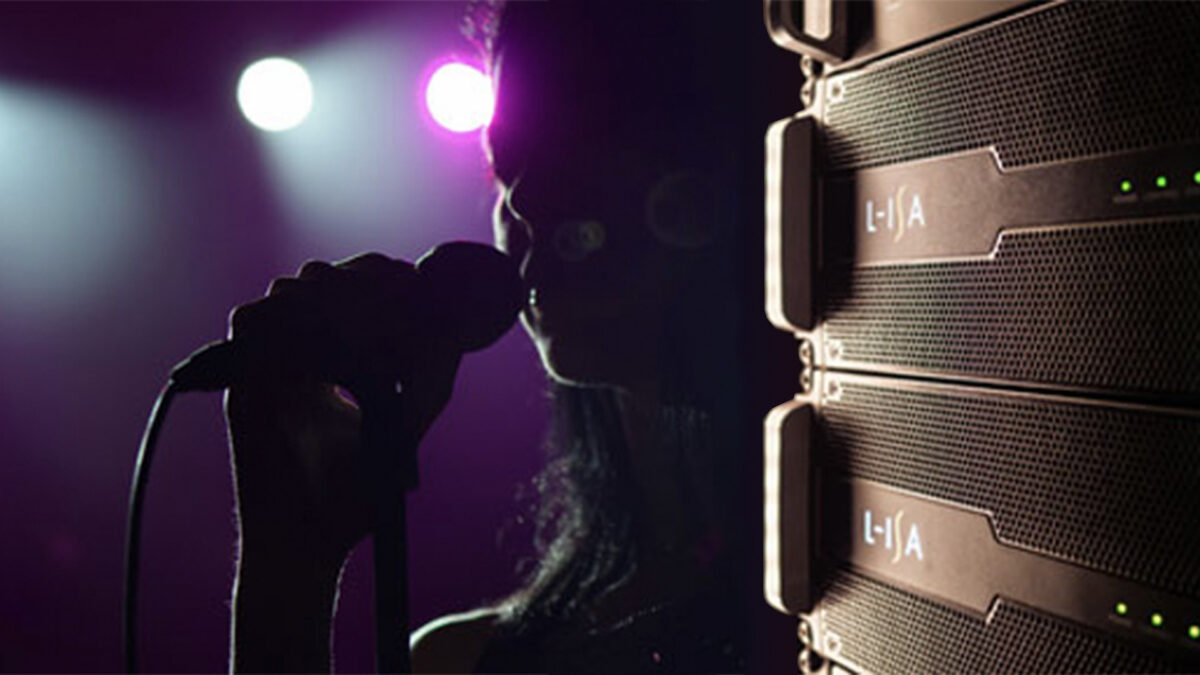
Source Intelligence runs as a licensed software application on the L-ISA Processor II Core — L-Acoustics' professional hardware platform — and requires no threshold setting, no ongoing adjustment, and no changes to your existing console workflow or signal routing. You insert it into the signal chain. It works. That's the whole story from an operational standpoint.
Why This Matters Specifically for Churches
To understand why Source Intelligence is such a significant development for houses of worship, it helps to understand the specific audio challenges that make church environments uniquely difficult.
Churches aren't concert halls. They aren't recording studios. They're spaces where a pastor needs to be heard clearly in the back row while a live band plays at full volume twenty feet away. Where a worship leader needs to move freely across a stage without triggering feedback from the PA system sitting right in front of them. Where a choir needs to be miked while the congregation sings along. Where the acoustic environment might be a reverberant stone sanctuary that was never designed for amplified sound, or a converted school gymnasium with parallel walls and hard floors, or a brand-new modern auditorium that still has acoustic quirks no design process fully anticipated.
Every one of these situations creates the same fundamental problem: unwanted noise getting into the microphone signal and degrading the clarity of the voice.
Professional audio engineers spend enormous amounts of time and skill managing this problem with traditional tools — careful mic placement, strategic use of directional microphones, gates, expanders, EQ, feedback suppressors, monitor level management. All of those tools help. None of them solve the problem at its root.
Source Intelligence solves it at its root. And the implications for church audio — both during worship and during preaching — are genuinely profound.
During Worship: What Source Intelligence Changes for Your Worship Team
The Drum Bleed Problem — Finally Solved
If your church has a live drummer on stage, your sound tech knows this problem intimately. The drum kit produces so much acoustic energy that it bleeds into virtually every other microphone on stage — the worship leader's vocal mic, the acoustic guitar mic, even lavalier mics on the far side of the stage can pick up significant drum bleed depending on the room. That bleed muddies every vocal channel and limits how much your sound tech can push those vocals in the mix before things get chaotic.
Source Intelligence removes that drum bleed from vocal channels in real time, leaving a clean vocal signal that can be mixed with far more headroom than was previously possible. Your worship leader's voice can sit where it belongs in the mix — present, clear, and emotionally immediate — without the constant acoustic competition from the kit behind them.
PA Spill and Feedback — The Single Biggest Worship Audio Limitation, Addressed
Here's the scenario that limits creative possibilities in virtually every worship environment: your main PA speakers are pointed at the congregation. Your worship leaders are standing in front of those speakers. Their microphones, pointed toward their mouths, are also pointed — to varying degrees — toward the PA speakers blasting sound at the congregation behind them. The louder the PA, the more PA spill enters the vocal mics. The more PA spill in the vocal mics, the closer you are to feedback. The closer you are to feedback, the less you can push the vocal level in the mix.
This physical reality constrains every creative and pastoral decision in a worship environment. How loud can the band get before the vocals can't keep up? How freely can the worship leader move across the stage without drifting into a feedback hot spot? How open can mics stay during spontaneous moments of congregational worship? The answers to all of these questions have always been dictated by the physics of PA spill entering open microphones.
Source Intelligence removes PA spill from the vocal signal with the same machine learning algorithm that removes instrument bleed. By up to 40dB. This means worship leaders can move freely — even stand directly in front of the PA — without the feedback risk that has always made that position untenable. The gain before feedback improvement that results from this is described by L-Acoustics engineers as unprecedented in live sound. Worship leaders, in other words, get their stage back.
Luke Roetman, Applications Director at North Point Ministries — the first house of worship to deploy Source Intelligence — described the experience directly: the technology allows them to get the gain they want from the mic without worrying about either feedback or stage noise that can impact the mix when the vocal is sitting where it needs to be. For a church of North Point's scale and production ambition, that's a transformative operational change. For churches of any size, the underlying benefit is identical.
Worship Leader Freedom and Spontaneity
One of the things that makes worship uniquely different from a concert or a corporate presentation is the element of Spirit-led spontaneity. A worship leader who feels called to walk off the stage and into the congregation. A moment of extended, unscripted ministry where the leader moves into spaces the audio system wasn't programmed for. A prayer that happens at an unexpected position on stage, near a monitor, near the edge of the PA coverage zone.
Traditional audio systems penalize this kind of freedom. The sound tech tenses up every time the worship leader drifts toward a feedback hot spot. Mics get quietly turned down to protect the system. The spontaneous moment that was spiritually significant gets acoustically constrained by physics.
With Source Intelligence dramatically expanding gain before feedback and removing PA spill from vocal signals, worship leaders are genuinely freer to go where the Spirit leads — without their sound tech quietly praying that they don't walk two more steps to the left.
Cleaner Mixes, Less Corrective Processing, More Creative Space
When every vocal channel enters the mixing console already cleaned of instrument bleed, crowd noise, and PA spill, the entire mixing process changes character. Your sound tech spends less time fighting problems and more time making musical decisions. Less corrective EQ to tame bleed frequencies. Less gate adjustment to catch the moments between phrases. Less feedback suppressor intervention. Less reactive mixing and more intentional mixing.
Joey Diehl, the FOH engineer for Benson Boone — one of the high-profile touring artists who validated Source Intelligence in real-world arena environments — described it as basically achieving studio quality vocals live, calling it a complete game changer for engineers willing to adopt it. That description resonates far beyond the touring world. For church audio environments where the gap between what the mix sounds like at the console and what it sounds like from the back of the room has always been frustratingly wide, studio-quality vocal isolation at the input stage changes that equation fundamentally.
During Preaching: What Source Intelligence Changes for Pastoral Communication
The benefits of Source Intelligence during the worship set are significant. But the implications for preaching and pastoral communication may be even more important — because speech intelligibility during the sermon is the single most mission-critical audio performance requirement in any church.
Your congregation can survive a slightly muddy mix during a worship song and still have a meaningful worship experience. But if they can't clearly understand every word of the sermon — if the pastor's voice is competing with room reflections, if the lapel mic is picking up air conditioning noise, if a slight gain adjustment causes the system to ring — the message itself is compromised. And the message is everything.
Lavalier Microphones and the Ambient Noise Problem
Most teaching pastors use a lavalier or headset microphone — a small mic clipped to clothing or worn on the head — that allows them to move freely without holding a handheld. These microphones are convenient and discreet, but they come with a significant acoustic trade-off: they're omnidirectional or near-omnidirectional, which means they pick up everything around the pastor, not just the pastor's voice.
HVAC noise from the building's ventilation system. Ambient crowd sound from a congregation settling in. Stage noise from the worship band's instruments and monitors. The acoustic hum of a modern building with dozens of powered devices. All of it enters the lavalier channel and has to be managed by the sound tech — with gates, EQ, and careful gain management — to prevent it from degrading the clarity of the spoken word.
Source Intelligence removes all of that non-voice content from the lavalier signal, delivering a pastor's voice to the mix with a clarity that traditional lavalier processing simply cannot achieve. The congregation in the back row hears the same clean, present, emotionally immediate voice as someone sitting in the front row. The words land. The message connects.
Teaching Pastors Who Move — Feedback Without Consequence
Many teaching pastors today don't stand behind a pulpit. They walk the stage. They move to the edge of the platform. They step down into the congregation during application moments. They use handheld mics for Q&A segments where they move the microphone toward congregants.
Every one of these movements creates potential acoustic challenges — feedback risk as the pastor approaches monitor wedges, PA spill as they move toward the edge of the stage, proximity changes as a handheld mic moves away from the mouth. Traditional audio systems handle these challenges reactively, with sound techs making constant real-time adjustments to keep the system stable.
Source Intelligence's feedback resistance means the pastor can move with genuine freedom. The acoustic danger zones that have always made certain stage positions problematic are dramatically reduced. The sound tech can focus on the mix rather than on microphone position management. And the pastor — perhaps most importantly — doesn't have to think about the audio at all. They can be fully present in the moment of ministry, because the technology is handling what used to require constant human vigilance.
Multi-Mic Environments: Panels, Q&A, Choir, and Beyond
Many churches run services with multiple simultaneous open microphones — a teaching panel with several pastors or guests, a Q&A format where handheld mics move through the congregation, a choir with multiple mics, a prayer team with lapel mics. Each additional open microphone traditionally multiplies the feedback risk and the ambient noise floor entering the system.
Source Intelligence supports up to four independent instances, and each instance can process a group of channels — for example, one instance for all handheld mics, one for all lavaliers, one for headset mics — allowing far more simultaneous open vocal channels than was previously manageable without constant aggressive gating. For churches running complex multi-mic services, this capability alone represents a significant operational improvement.
The Technology Behind It: What Makes This Different From Everything That Came Before
It's worth spending a moment on why Source Intelligence is genuinely different from existing noise suppression and feedback management tools — because the market is full of products that make similar-sounding claims and deliver very different results.
Traditional gates and expanders work by monitoring signal level. When the level drops below a set threshold, the gate closes and the channel goes quiet. This helps with bleed between phrases but does nothing while the vocal is active — which is precisely when the bleed and PA spill are entering the signal along with the voice.
Traditional feedback suppressors work by detecting resonant frequencies as they build and applying narrow EQ cuts to suppress them. They're reactive by nature — they respond to feedback developing rather than preventing the conditions that cause it — and those EQ cuts, applied dynamically across multiple frequencies over time, gradually degrade the quality and naturalness of the vocal tone.
Source Intelligence works differently at a fundamental level. It uses a machine learning algorithm that has been trained on an enormous range of voice and non-voice acoustic content to continuously identify — not the level of a signal, but the nature of it. It knows what a human voice sounds like, acoustically, and it knows what everything else sounds like. It separates them in real time and removes the non-voice content from the signal while preserving the voice with what L-Acoustics describes as no perceived impact on vocal quality.
In blind listening tests conducted across multiple validation sessions, Source Intelligence was consistently rated the highest quality output compared to competing noise suppression tools — delivering significantly greater noise reduction while maintaining the same voice quality. That combination — more reduction with no quality penalty — is what makes this technology categorically different from what came before it.
The latency introduced by this processing is under 8.5 milliseconds over MADI — a number that L-Acoustics' own validation engineers, and some of the most demanding live sound engineers in the world, confirmed is within tolerable limits for live sound at front of house. For practical church applications, it is imperceptible.
How Source Intelligence Works in Practice
Source Intelligence runs as a licensed application on the L-ISA Processor II Core — L-Acoustics' professional processing platform that also powers their L-ISA Immersive Hyperreal Sound system. It requires a firmware update to the processor, but this update includes all L-ISA functionality — it's a single update, not a separate installation.
From a workflow standpoint, the simplicity is one of its most appealing characteristics for church environments. There are no thresholds to set. No ratios to configure. No complex menus to navigate. Channel routing is straightforward, and the controls are intentionally minimal — refinement of high and low frequency content, input and output routing, and that's essentially it. L-Acoustics designed it for the realities of live sound: fast setup, consistent results, minimal ongoing adjustment.
It supports input and output via MADI, Milan-AVB, or AES — the standard professional audio networking formats used in touring and installed sound environments — meaning it integrates cleanly into existing professional signal chains without requiring significant infrastructure changes.
Redundancy is built in at multiple levels: power supply redundancy, network audio redundancy, and full DSP redundancy. For a church that runs multiple services every weekend and cannot afford a system failure, this level of engineered reliability matters.
It is worth noting that at this time, Source Intelligence operates exclusively within L-Acoustics systems — it requires at least three L-Acoustics amplified controllers to validate — and cannot run simultaneously with L-ISA Immersive sound on the same processor. These are important system design considerations for churches evaluating integration, and ones we're happy to walk through in detail.
North Point Ministries: The First Church to Deploy It
The most compelling real-world validation of Source Intelligence in a house of worship context comes from North Point Community Church — one of the largest and most technologically sophisticated churches in the United States, based in the Atlanta area — which became the first house of worship in the world to deploy Source Intelligence in a production environment.
Luke Roetman, Applications Director at North Point Ministries, summarized the operational impact precisely: Source Intelligence allows them to achieve the gain they want from the vocal microphone without worrying about either feedback or stage noise affecting the mix. That's not a marginal improvement. That's a fundamental change in the operational constraints of the system — the kind of change that experienced audio directors at high-profile churches don't describe casually.
North Point's deployment also included L-ISA Immersive Hyperreal Sound, L-Acoustics' spatial audio platform, creating an audio environment designed to keep the congregation's focus where it belongs: on the stage and the message. The combination of immersive spatial audio and Source Intelligence vocal clarity represents a level of audio intentionality that very few houses of worship have yet experienced — but that more will inevitably pursue as these technologies become more widely deployed.
What This Means for Churches Exploring L-Acoustics Systems
Source Intelligence isn't for every church today — it requires an L-Acoustics system with the L-ISA Processor II Core, which places it in the context of larger, more sophisticated installations. But the trajectory is clear, and the implications for church audio are significant regardless of where a church sits on the technology adoption curve right now.
For churches currently running or planning L-Acoustics systems, Source Intelligence is a licensed software addition to existing infrastructure — a meaningful capability upgrade that doesn't require new loudspeakers or amplification. If you're in that category, this is a conversation worth having immediately.
For churches in the earlier stages of a system upgrade or planning a new installation, Source Intelligence represents a compelling reason to think seriously about what platform you invest in. The L-Acoustics ecosystem is one of the most sophisticated and forward-looking in professional audio, and technologies like Source Intelligence are a concrete demonstration of why that matters for long-term system value.
For churches that aren't yet at the scale or budget level where L-Acoustics systems are part of the conversation, this technology is still worth knowing about — because it signals the direction the entire professional audio industry is moving. Machine learning-based vocal isolation is going to become more widely available across more platforms and price points over time. Understanding what it does and why it matters positions your leadership to make better decisions as those options become accessible.
At Brilliance AV, we stay current on developments like Source Intelligence specifically because our job is to help churches make smart, forward-looking technology decisions — not just install what was cutting-edge three years ago. Our design process always includes a conversation about where audio technology is headed, so the systems we build today are positioned to take advantage of what's coming rather than being left behind by it.
Frequently Asked Questions: L-Acoustics Source Intelligence for Churches
Does Source Intelligence require a completely new audio system?
No. Source Intelligence runs as a licensed software application on the L-ISA Processor II Core — hardware that may already be part of an existing L-Acoustics installation. It requires a firmware update (which also includes L-ISA updates) and a software license activation, but does not require new loudspeakers or amplification. For churches already running L-Acoustics systems with the L-ISA Processor II, adding Source Intelligence is a software decision, not a hardware replacement project.
Can it run at the same time as L-ISA Immersive sound?
Not currently on the same processor. At this time, a single L-ISA Processor II can run either Source Intelligence or L-ISA Immersive, but not both simultaneously. Churches wanting both capabilities would need to incorporate multiple processors in the system design — something worth planning for if both technologies are part of your vision. This is a system design conversation we're glad to have in detail.
Does the processing latency cause any problems during live services?
Source Intelligence introduces under 8.5 milliseconds of latency over MADI end-to-end. L-Acoustics conducted extensive real-world validation with leading live sound engineers — including on major arena tours — and their universal feedback was that this latency is within tolerable limits for live sound production. In a church environment, it is not perceptible to performers or congregation members.
How many vocal channels can it process simultaneously?
Source Intelligence provides four instances, each of which can process a group of vocal channels. For example: one instance for all handheld vocal mics, one for all lavalier mics, one for headset mics, and one for choir or panel microphones. This allows processing of more than four individual voices through the four available processing channels — a workflow particularly well-suited to complex church service formats with multiple simultaneous speakers or singers.
Is this technology only for very large churches?
Currently, Source Intelligence is positioned for churches running or planning L-Acoustics systems — which tend to be mid-to-large scale installations. However, the technology represents a direction the industry is moving, and the underlying benefits of machine learning-based vocal isolation will become accessible at more price points over time. For churches at the scale where L-Acoustics systems are appropriate, the conversation is happening now. For others, understanding the technology positions you to make better decisions as it becomes more widely available.
How do we find out if Source Intelligence is right for our church's system?
That's exactly the kind of conversation we love having. Reach out to the Brilliance AV team and let's talk about your current system, your worship environment, and what your audio challenges look like week to week. We'll give you an honest picture of whether and how Source Intelligence fits your context — and if it doesn't yet, we'll tell you that too.
The Bottom Line: A New Era for Church Vocal Clarity
Church audio has always been a discipline of managing tradeoffs. The pastor's mic picks up the drums, so you gate it — but then it closes too fast and clips the last syllable of every phrase. You push the worship leader's vocal to where it needs to be in the mix, and the system starts to ring — so you back it off and lose the intimacy and presence that makes worship feel real. You keep the mics open for spontaneous moments, and the room noise and PA spill fill the mix with unwanted sound.
Every church audio director, every volunteer sound tech, every worship pastor who has ever stood on a stage and gestured to the sound tech for more vocal — all of them have been working within the same fundamental constraints for decades. The tools got better. The consoles got smarter. The speakers got more precise. But the underlying problem — unwanted sound getting into the microphone along with the voice — remained unsolved at the hardware and software level.
Source Intelligence solves it.
Not by managing the problem more cleverly with the same reactive tools. By understanding, in real time, what a voice is — and removing everything that isn't one. Up to 40dB of non-voice signal reduction, with no perceived impact on vocal quality, at latencies low enough for live performance, with enough gain before feedback headroom to give worship leaders and teaching pastors freedoms they've never had before.
We were in Las Vegas for InfoComm 2026. We heard what this technology does in a controlled demo environment. And we came back genuinely excited about what it means for the churches we serve — because for the first time in a long time, a technology announcement felt like a real answer to a real problem that real churches face every single Sunday.
The message your pastor preaches deserves to be heard clearly. The worship your team leads deserves to land with the emotional presence and intimacy that the musicians intend. Source Intelligence is a meaningful step toward both of those things — and we're here to help you understand how it fits into your church's audio future.
Focus the many on the One. That's the goal. This is a tool that helps get there.
Want to talk about what Source Intelligence could mean for your church? Contact the Brilliance AV team for an honest conversation about your system, your space, and whether this technology is the right next step for your worship environment. No pressure. No overselling. Just real expertise from a team that cares about getting church audio right.
Let's build irresistible experiences.
Connect With Us
Planning a project? Share your vision with us through this form, and we'll connect with you shortly.
Portable PA Systems for Small Churches and Church Plants: What You Actually Need

Church Presentation Software: ProPresenter and the Alternatives, Compared
How to Light a Worship Stage: A Beginner’s Guide for Phoenix Churches

How Much Internet Speed Does Your Church Need to Live Stream?
Does Your Church Need an Assistive Listening System? ADA and Hearing Help, Explained
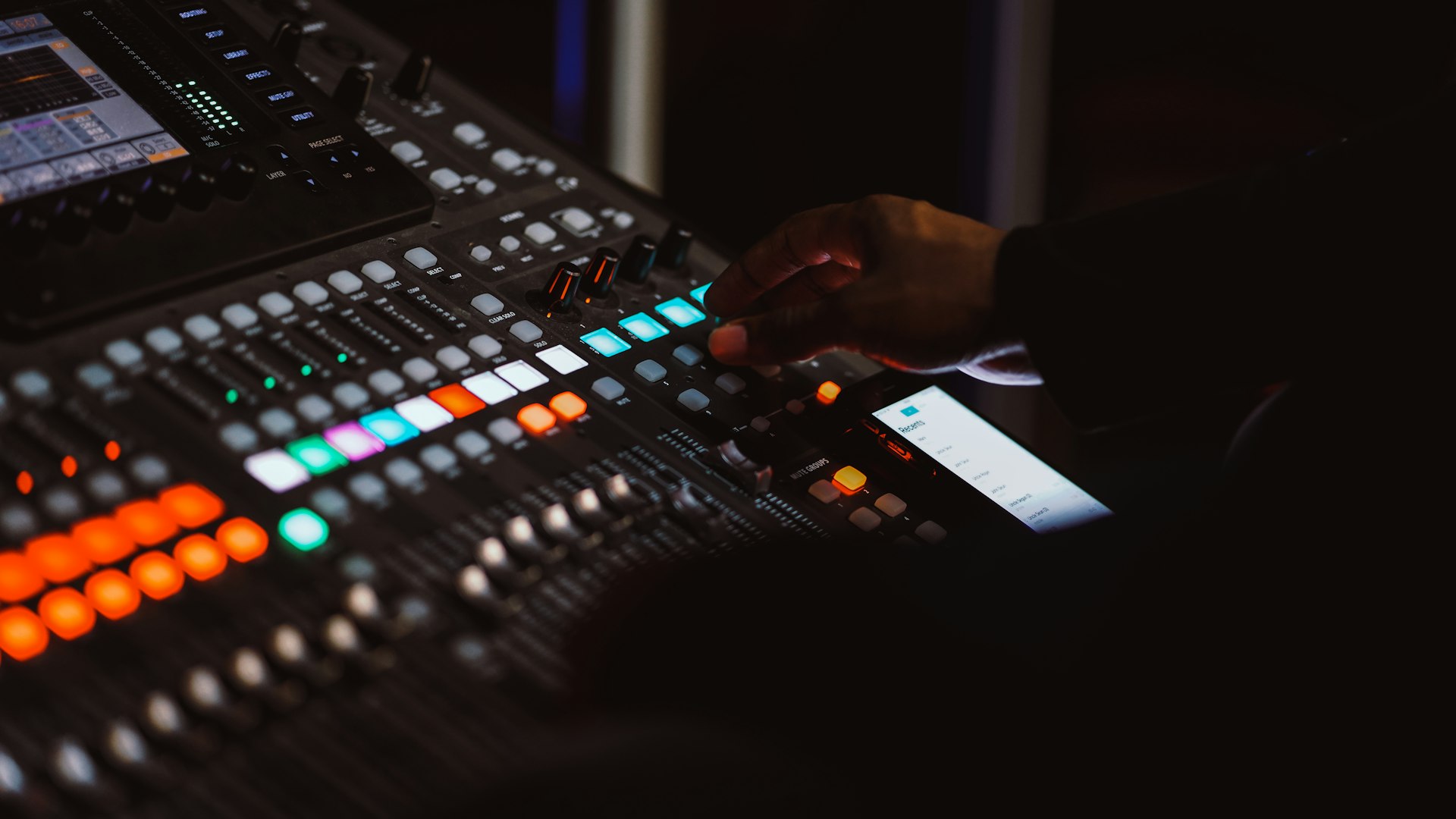
How to Stop Microphone Feedback in Your Church Before It Ruins the Service
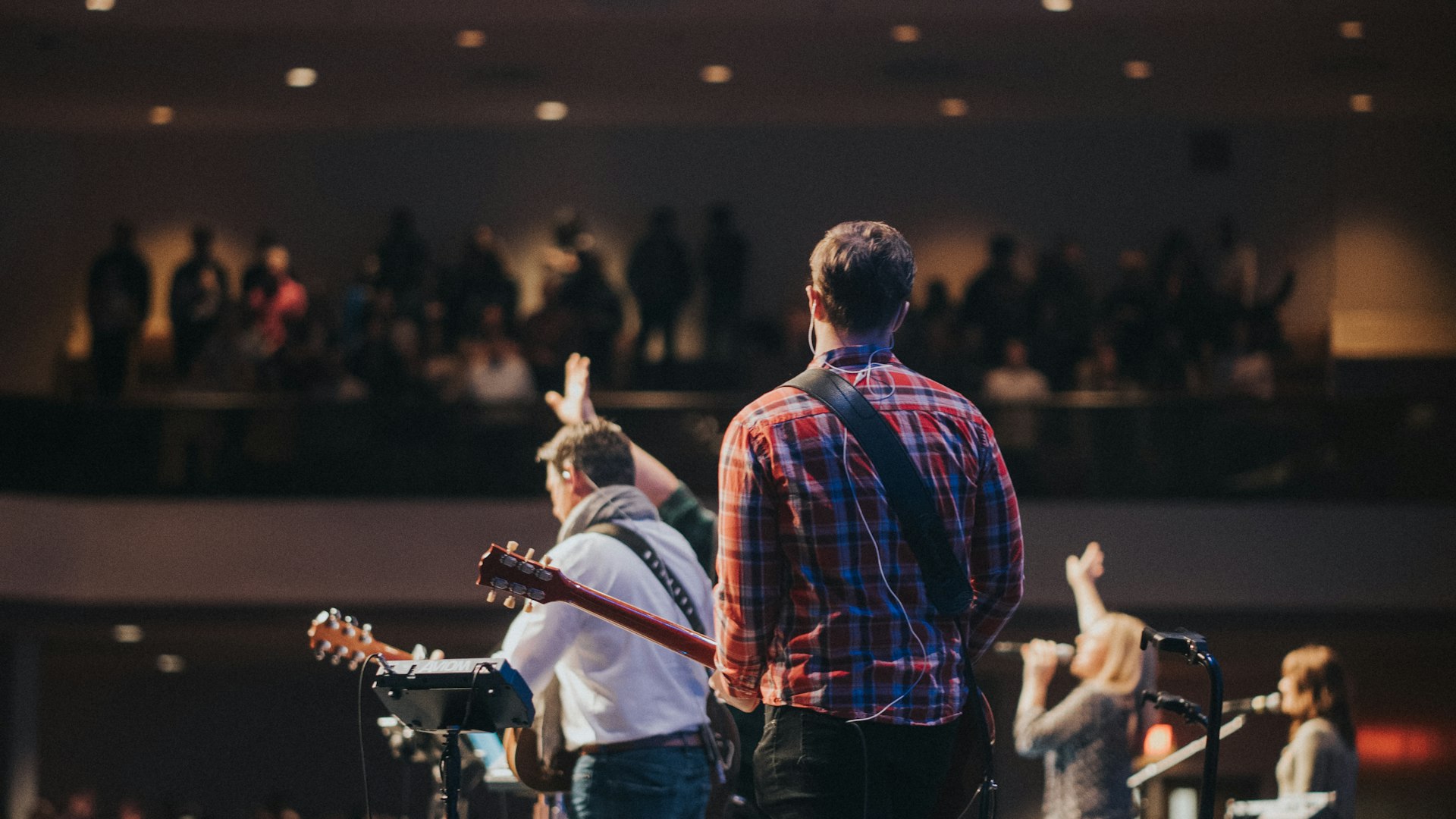
Can My Church Legally Stream Worship Songs? CCLI and Streaming Licenses, Explained
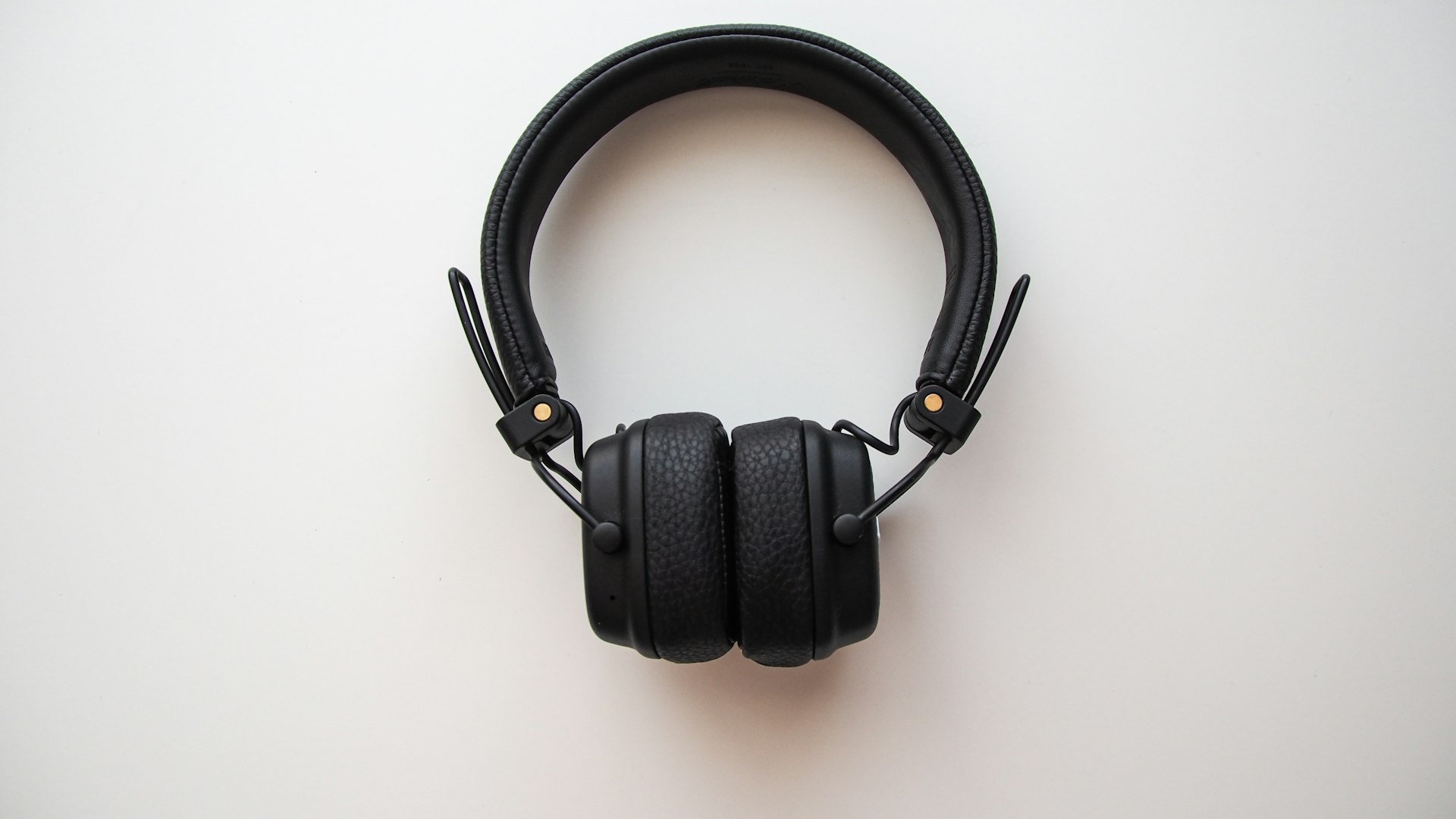
Does Your Church Production Team Need a Headset Intercom System?