By the team at Brilliance AV — Arizona's church AVL design and installation specialists
So your church is thinking about an LED wall. Maybe you saw one at a conference. Maybe the worship pastor at a neighboring church has one and now your elders can't stop talking about it. Maybe you Googled "church LED wall" at midnight and found a website selling panels for what seems like an impossibly great price.
We're going to talk about all of that — including the midnight shopping scenario, which never ends the way you hope.
LED walls are genuinely transforming the worship experience at churches across Arizona, and we love helping congregations get them right. But "getting them right" is the operative phrase. Because there's a big difference between an LED wall that elevates your worship environment for the next decade and one that has your tech volunteer staring at a wall full of dead pixels and an overseas customer service email that hasn't been answered since February.
Let's make sure you end up with the former.
Why Arizona Churches Are Making the Switch to LED Walls
Projectors have served the church world faithfully for a long time. But LED walls have quietly become the new standard — and for good reason. Here's what's driving the shift:
- Brightness that actually works in Arizona light. Phoenix churches deal with intense ambient light — big windows, bright foyers, and sunshine that makes most projector screens look washed out by 9 AM. LED walls produce dramatically higher brightness levels, with quality panels outputting 800 to 1,500+ nits for indoor installations. Your worship lyrics will actually be readable during the 10:30 service. Revolutionary, we know.
- Contrast and color depth that projectors simply can't match. The vibrancy of worship backgrounds, sermon graphics, and video content on a well-calibrated LED wall has to be seen to be believed. It's the difference between watching a movie on your laptop versus a cinema screen.
- No more projector lamp replacements. If you've ever had to cancel your midweek service because the projector lamp burned out and the replacement costs $400 and ships in five business days — you already know. LED panels have lifespans measured in tens of thousands of hours. The lamp budget alone often offsets a meaningful portion of the LED wall investment over time.
- A cleaner, more intentional aesthetic. A flush-mounted LED wall creates a modern, distraction-free visual environment. No ceiling-mounted projector humming. No keystone correction. No shadow when the worship leader raises their hands at the wrong moment.
All of that sounds great. And it is — when the system is designed and installed properly. Which brings us to the part of the conversation most LED wall vendors would prefer to skip.
An LED Wall Is Not a Giant TV. Treat It Like One and You'll Regret It.
This is the most important thing we want Arizona churches to understand before they start shopping: an LED wall is not a product. It's a system.
Every LED wall installation involves multiple interdependent components that all have to work together correctly:
- The LED panels themselves — the physical tiles that make up the display surface
- The video processor — the brain that takes your content signal and tells each pixel exactly what to display
- The signal distribution system — how video gets from your switcher or media server to the wall
- The structural mounting system — engineered to safely support hundreds of pounds of panels on your specific wall
- Power distribution — LED walls draw significant power, and your electrical infrastructure needs to support it safely
- The content workflow — how your ProPresenter or other worship software integrates cleanly with the wall's resolution and processing
If any one of those components is wrong — undersized, mismatched, or poorly installed — the whole thing suffers. You can have the most beautiful LED panels on the market and still end up with a system that flickers, drops signal, doesn't match your worship software's output, or causes your circuit breakers to trip on a Sunday morning.
We've walked into all of those situations. They are completely avoidable with proper design. They are very expensive to fix after the fact.
The Pixel Pitch Question: What It Means and Why It Matters for Your Sanctuary
If you've done any LED wall research at all, you've encountered the term "pixel pitch" — and probably felt your eyes glaze over immediately. Fair. Let's make this simple.
Pixel pitch refers to the distance between individual LEDs on the panel, measured in millimeters. A smaller number means the pixels are closer together, which means higher resolution and sharper image quality — but also higher cost. A larger number means more space between pixels, which is fine at longer viewing distances but looks pixelated up close.
Here's the practical rule of thumb most professionals use: multiply the pixel pitch by 10 to get the minimum comfortable viewing distance in feet.
- P1.9mm — minimum viewing distance ~19 feet. Excellent for smaller sanctuaries or walls where the congregation sits close. Ultra-sharp, higher cost.
- P2.5mm — minimum viewing distance ~25 feet. A sweet spot for many mid-size Arizona church sanctuaries. Great image quality at a more accessible price point.
- P2.9mm–P3.9mm — minimum viewing distance ~29–39 feet. Ideal for larger rooms where most seats are farther back. Very cost-effective for the right application.
The mistake churches make is either buying a finer pixel pitch than their room needs (paying for resolution their congregation can't actually see) or buying a coarser pitch to save money and ending up with a pixelated image that makes your worship graphics look like a retro video game. Neither outcome is great.
Getting pixel pitch right requires measuring your actual room — the distance from the screen to the nearest and farthest seats, the viewing angles, the ambient light levels. This is part of what our design process at Brilliance AV includes for every LED wall project, and it's why we don't quote LED walls over the phone without first understanding your space.
Why Cheap LED Walls Are One of the Costliest Mistakes a Church Can Make
Alright. Let's talk about the elephant — or rather, the suspiciously affordable LED panel — in the room.
A quick online search will surface dozens of LED panel suppliers offering prices that seem too good to be true. And here's the thing: they usually are. The AV industry has a lot of data on this now, and the pattern is remarkably consistent.
The LED Quality Problem You Can't See on a Spec Sheet
Not all LEDs are created equal — not even close. Professional-grade LED wall manufacturers use rigorously sorted, Grade A LEDs from the center of the production wafer. These are the ones with the most consistent brightness, color accuracy, and longevity.
Budget manufacturers? They're often using Grade D and F LEDs — the ones from the edges of the wafer that didn't make the cut for premium products. These LEDs are less consistent in brightness and color from the moment they're installed, and they degrade faster. This is why budget walls often start showing color inconsistency and uneven brightness well within the first year or two of regular use — before anyone expected to be thinking about repairs.
There's also a batching issue. Quality manufacturers track the production batch of every LED panel so that if one panel ever needs to be replaced, a matching replacement can be sourced. Budget manufacturers typically don't maintain this level of quality control. So when a panel fails — and eventually, a panel will fail — the replacement may not match the rest of your wall in brightness or color tone. Now you have a patchwork effect on your display that's visible to every person in your sanctuary every single Sunday.
The Warranty That Isn't Worth the PDF It's Written On
Budget LED suppliers love to advertise generous-sounding warranties. Five years! Seven years! Lifetime coverage on select components! What they don't advertise as prominently:
- The warranty may only cover catastrophic, complete panel failure — not dead pixels, color uniformity issues, or brightness degradation, which are the problems you'll actually encounter
- Making a warranty claim may require shipping panels overseas at your expense — which can easily cost more than just buying a replacement panel locally
- A significant percentage of budget LED suppliers don't exist in their current form within three years of your purchase. The warranty paperwork becomes a souvenir.
Industry data on budget LED suppliers is genuinely alarming: roughly 30% of budget suppliers fail basic quality tests, about 1 in 5 budget displays shows pixel defects within the first six months, and a substantial portion of warranty claims from budget-wall buyers are rejected on technicalities. That's not a risk worth taking with your congregation's resources.
The Arizona Heat Factor
Here's something the generic LED wall buying guides won't tell you, but that matters enormously for Arizona churches: heat is one of the leading killers of LED wall components.
Power supply failures — the single most common LED wall failure mode — have their lifespan cut by up to 40% when operating in high-temperature environments. Phoenix summers regularly push 115°F outdoors, and even with AC running, many church buildings cycle between temperature extremes that budget-grade components aren't engineered to handle. Quality manufacturers design their panels with thermal management in mind. Budget panels often don't. The desert is not forgiving to corners that got cut in a factory overseas.
What Professional LED Wall Design Actually Includes
When Brilliance AV designs an LED wall system for an Arizona church, the panel selection is one part of a much larger process. Here's what professional design looks like in practice:
Room Analysis and Viewing Distance Study
We measure your sanctuary — seating layout, distance from the closest and farthest seats to the screen, ceiling height, ambient light sources, and any sightline obstructions. This determines the right pixel pitch, screen size, and mounting position before a single quote is generated.
Structural Engineering
LED walls are heavy. A 16-foot-wide by 9-foot-tall installation can weigh several hundred pounds, and that weight needs to be supported by structure — not just the drywall your sanctuary was built with. We coordinate structural requirements with your facility so the mounting system is engineered for the load, not improvised on installation day.
Electrical Planning
LED walls draw substantial power. A professionally designed system accounts for circuit capacity, dedicated runs, and proper power distribution so your wall performs reliably and your electrical system stays safe. Skipping this step is how churches end up with tripped breakers during the sermon — which is, to put it gently, not ideal.
Video Signal Flow and Content Integration
Your LED wall needs to receive a clean, properly formatted signal from your video switcher, media server, or ProPresenter workstation. We design the signal chain to ensure everything talks to everything else cleanly — including camera feeds if you're livestreaming, which most Arizona churches are doing or planning to do.
Camera and Livestream Considerations
This one catches a lot of churches off guard. If you're streaming your services — and if you're not, you probably should be — your LED wall needs to be configured with a refresh rate high enough to avoid scan lines on camera. Budget panels frequently fail this test, producing ugly flickering or banding in your video stream that makes your production look like a 1990s public access channel. Quality panels with high refresh rates (7,680Hz and above) eliminate this problem entirely.
The Manufacturers We Trust — and Why
At Brilliance AV, we're selective about the LED wall manufacturers we work with. That's not snobbery — it's stewardship. Here's what makes a manufacturer worth trusting for a church installation:
- Proven track record across thousands of installations, including houses of worship, broadcast studios, and live events — not just a polished website with stock photos
- Real warranty coverage with US-based support and parts availability, so when something needs attention, you're not waiting on a slow boat from overseas
- Batch tracking and color matching so replacement panels integrate seamlessly with your existing installation years down the road
- High refresh rates (7,680Hz+) for clean camera and livestream performance
- Thermal engineering appropriate for high-temperature environments — a non-negotiable for Arizona installations
Absen is one of the manufacturers that consistently meets these standards for church-grade fixed installations. With over 60,000 installations worldwide including major houses of worship, a genuine 5-year manufacturer warranty, US-based support infrastructure, and a product line specifically designed for the brightness and refresh rate demands of worship environments, they're a name we're comfortable putting our reputation behind. We evaluate manufacturer options on a project-by-project basis, and we're always happy to walk through the reasoning with your leadership team.
LED Walls and Your Volunteer Team
One thing that often gets overlooked in the excitement of LED wall planning: somebody has to run this thing every week. And that somebody is probably a volunteer who also serves in three other ministry areas and learned ProPresenter from a YouTube tutorial eighteen months ago.
A well-designed LED wall system, integrated cleanly with your existing workflow, should actually be simpler for volunteers to operate than what they're doing now. Content appears at full brightness automatically. There's no warm-up time. There's no focus adjustment. There's no "why does the image look green today" troubleshooting before the service starts.
A poorly designed system — or a budget wall that wasn't configured properly — creates a weekly anxiety that good volunteers eventually decide isn't worth the stress. We've seen it happen. A great LED wall system should make Sunday mornings easier, not harder. That's part of what we optimize for in every Brilliance AV design.
We also train your team. Not a thirty-minute walkthrough on installation day and then a wave goodbye — actual training designed around how your specific volunteers will use the system week in and week out. And our ongoing support means we're reachable when questions come up down the road.
What Does a Church LED Wall Cost in Arizona?
We'll be transparent here, because we think churches deserve straight answers on this.
A professionally designed and installed LED wall system for an Arizona church sanctuary typically falls in the following ranges, depending on screen size, pixel pitch, structural requirements, and integration complexity:
| System Scale | Typical Screen Size | Investment Range |
|---|---|---|
| Smaller Sanctuary | 10–14 ft wide | $35,000–$60,000 |
| Mid-Size Sanctuary | 14–20 ft wide | $60,000–$110,000 |
| Large Sanctuary / Stage Backdrop | 20+ ft wide or multi-wall | $110,000+ |
These ranges include everything: panels, processor, structural mounting, electrical work, installation, calibration, integration with your existing video system, and training. Not just the panels sitting in boxes at the loading dock.
Yes, you can find LED panels online for a fraction of these numbers. You will also not have a structural engineer, a licensed electrician, a properly configured video processor, a calibrated system, trained volunteers, or anyone to call when something goes wrong on a Saturday night before Easter. The math on that particular savings rarely works out in the church's favor.
Frequently Asked Questions: Church LED Walls in Arizona
How long do LED walls last?
Quality LED panels from reputable manufacturers are rated for 100,000+ hours of use — that's decades of weekly services at normal operating brightness. Budget panels from unverified manufacturers often show significant degradation in brightness and color accuracy within two to three years of heavy use. The lifespan difference between quality and budget is not marginal. It's the difference between a ten-year investment and a two-year headache.
Can an LED wall work for livestreaming?
Yes — if it's specified correctly. The key spec is refresh rate. Quality LED panels operate at 7,680Hz or higher, which completely eliminates the scan lines and flicker that cheaper panels produce on camera. If your church streams services — and most Arizona churches do — this is a non-negotiable specification that needs to be part of your design from the beginning.
Do we need to replace our projector screen structure if we switch to LED?
Usually yes — LED walls require their own structural mounting system, and existing projector screen infrastructure typically isn't designed to support the weight of an LED wall. This is one of the reasons a proper site visit and structural evaluation are part of our process before any LED wall project begins.
Can we phase an LED wall project within our budget?
In some cases, yes. Certain LED wall configurations allow a smaller initial installation with expansion panels added later — but this only works cleanly when it's planned from the beginning with the right infrastructure in place. An LED wall that was designed for expansion is very different from trying to add panels to a system that wasn't. Talk to us about your budget and vision, and we'll tell you honestly what's achievable.
What about using an LED wall as a stage backdrop in addition to IMAG screens?
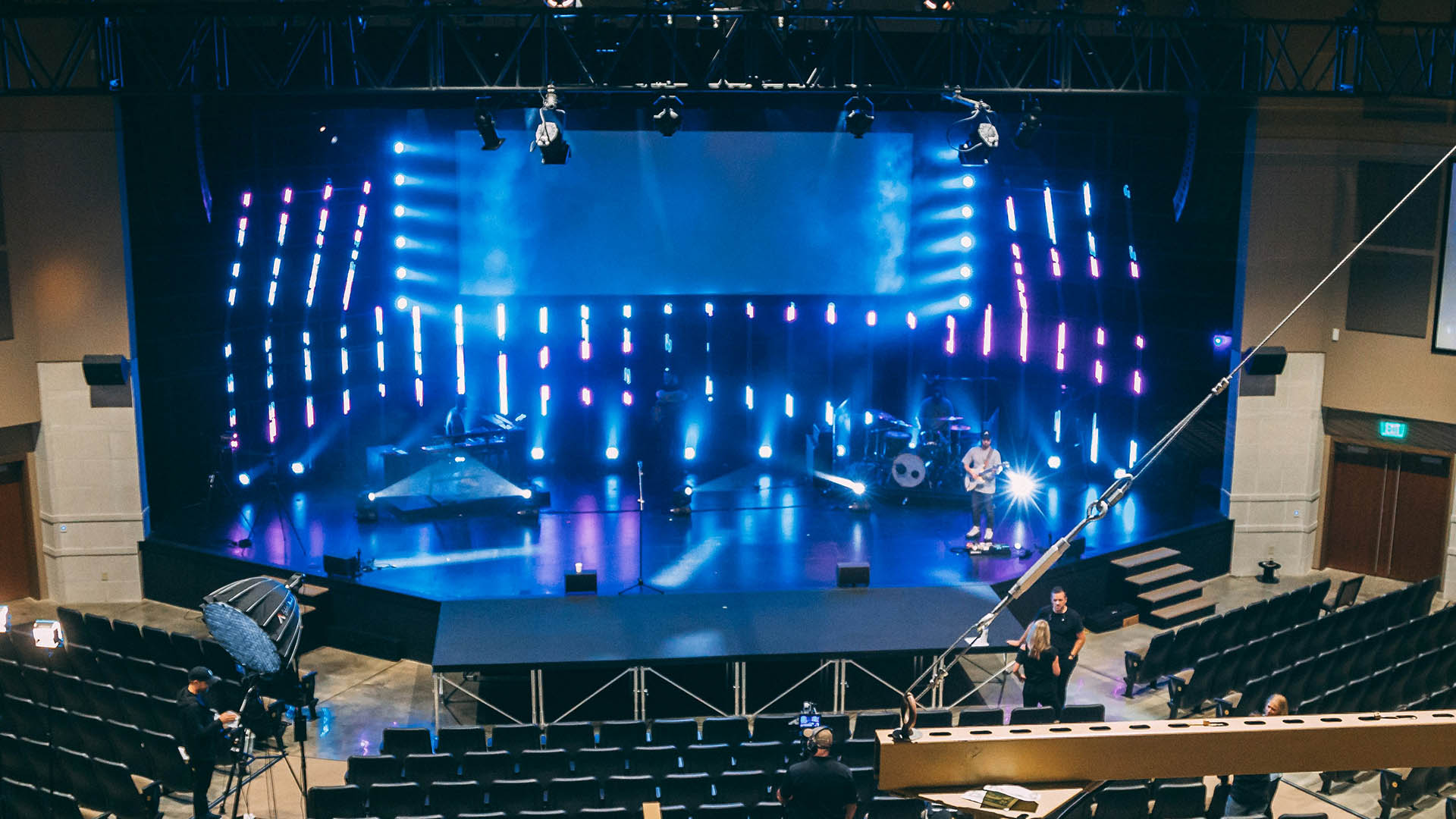
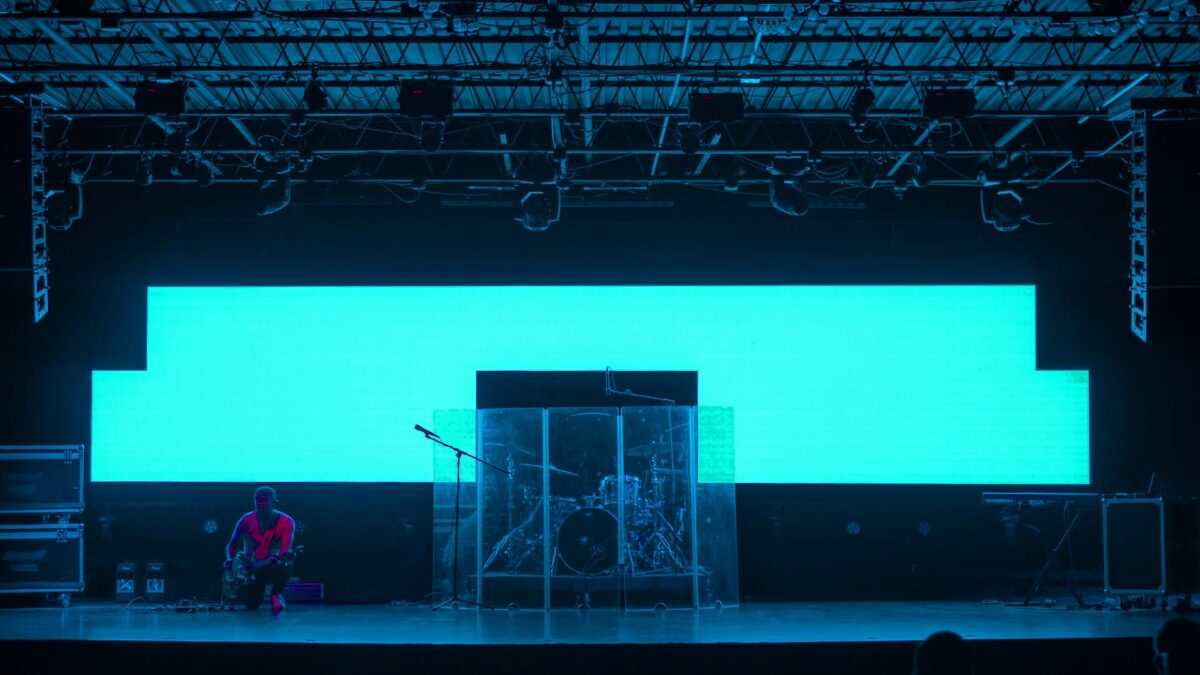
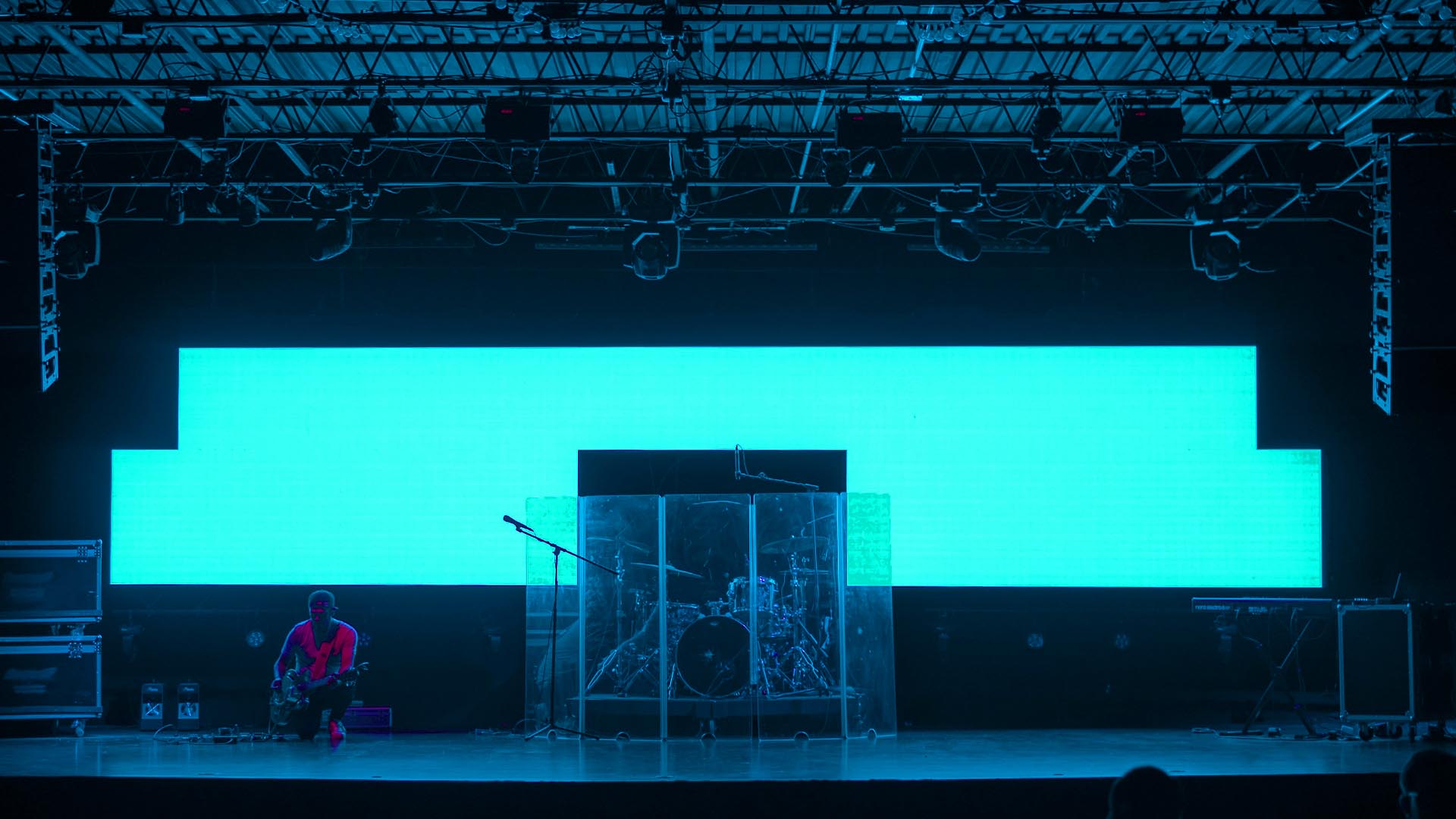
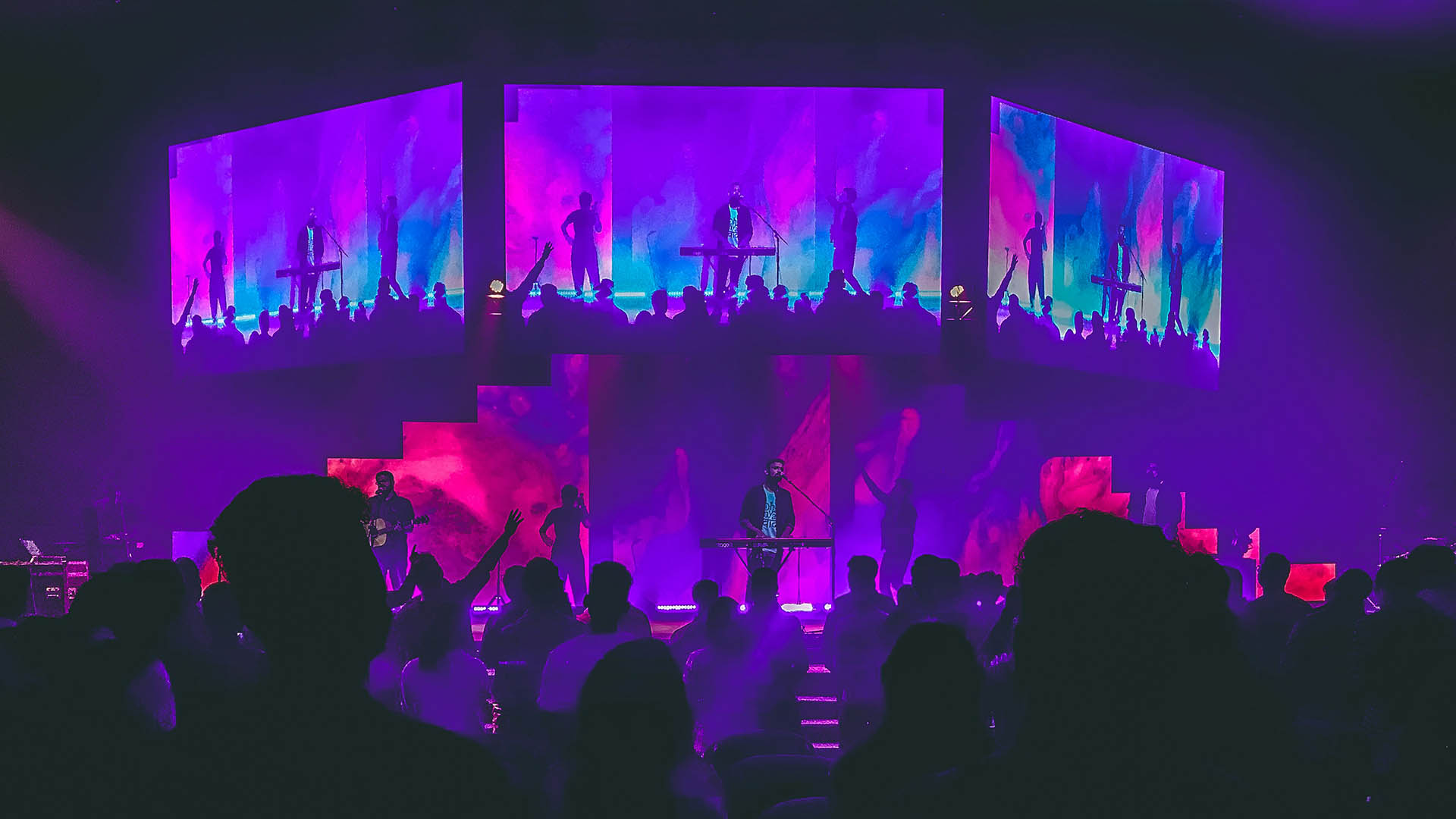
This is a great application and increasingly common in Arizona churches with contemporary worship styles. A stage backdrop LED wall creates a stunning visual environment for worship without a projector screen dominating the room. Combined with confidence monitors or smaller side screens for lyrics, it's a powerful setup. The design considerations are somewhat different from a traditional front-of-house display wall, and we'd love to walk you through the options during a free consultation.
The Bottom Line: Your Congregation Deserves to See It Done Right
LED walls are one of the most impactful visual upgrades an Arizona church can make. When a well-designed, quality LED wall comes to life in your sanctuary for the first time — lyrics crisp and brilliant, worship backgrounds immersive, your pastor's face clearly visible from every seat — the effect on your congregation is immediate and real. People lean in. The room feels more alive. Worship feels more unified.
That experience is absolutely achievable. But it requires doing it right: the right panels, the right design, the right installation, and the right support on the other side. Cutting corners anywhere in that chain risks ending up with a very expensive problem instead of a ministry asset.
At Brilliance AV, we've helped churches across Arizona navigate these decisions with honesty, expertise, and a genuine commitment to getting it right — not just on day one, but for the decade that follows. We're not going to oversell you on something your room doesn't need, and we're not going to hand you an LED wall and disappear. We're your partner in making technology serve your mission the way it was always meant to.
Focus the many on the One. That's what great AVL design does. And we'd love to help your church experience it.
Ready to explore what an LED wall could look like in your sanctuary? Contact the Brilliance AV team for a no-pressure conversation about your space, your vision, and your budget. We'll give you straight answers — no jargon, no bait-and-switch, just real expertise from a team that genuinely cares about your ministry.
Let's build irresistible experiences.
Connect With Us
Planning a project? Share your vision with us through this form, and we'll connect with you shortly.
Church Plant AVL Guide: Everything Church Plants Need to Know About Audio, Video & Lighting
What Does a Church AVL Installer Actually Include? Microphones, Speakers, Cameras, Lighting & More
Why Buying Church AV Equipment Piece by Piece Costs Your Arizona Church More in the Long Run
Best Audio Equipment for Small Church Sanctuaries: Budget-Friendly Solutions That Actually Work
What’s the Right Church Sound System for My Congregation Size? Matching Equipment to Needs
Choosing the Best Display Technology for Your Arizona Church Worship Center
Lighting Design for Worship Services: Creating the Right Atmosphere in Arizona Churches